
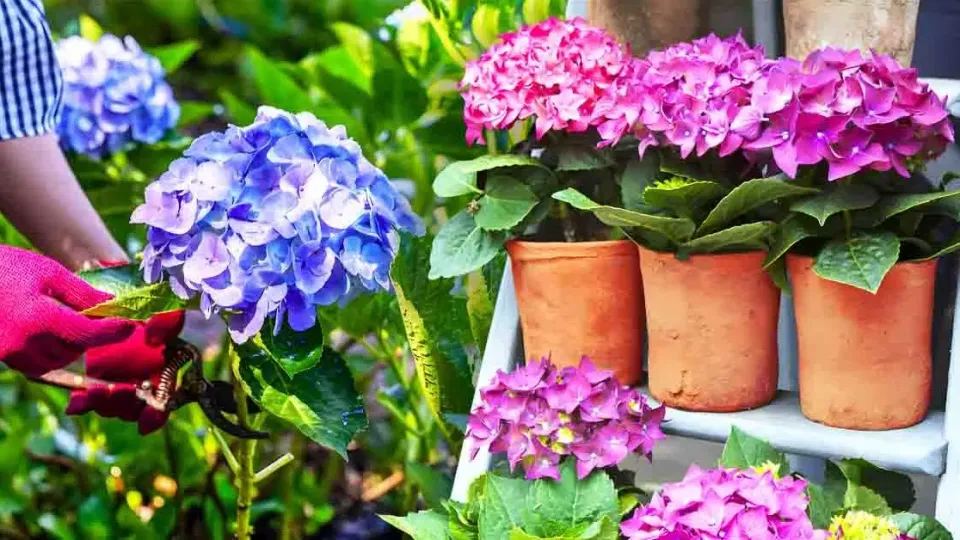
Hydrangeas, with their breathtaking blooms, stand out as one of the most enchanting deciduous flowering bushes. If you’ve wandered through a nursery, you’ll note that these beauties often carry a hefty price tag, typically ranging between $25 and $50. This price point might nudge you to consider propagating your own plants through stem cuttings, allowing you to nurture a multitude of hydrangeas without emptying your wallet.

Remarkably, hydrangeas are ideally suited for propagation through cuttings. Unlike several other bushy plants, they exhibit rapid growth, blossoming into full-fledged flowering shrubs in just about a year.
Ideal Timing for Hydrangea Cuttings
While gardening enthusiasts have varied opinions on the perfect time for cuttings across different hydrangea varieties (like big-leaf, oak-leaf, smooth, and panicle), a common consensus is that spring stands out as the optimal time. This season witnesses a surge in the plant’s metabolic activity and growth, offering ample time for the cuttings to evolve into mature plants by fall.
It’s advisable to snip cuttings either early in the morning or during the evening to avoid the midday heat, which can stress the freshly cut stem.
Although some gardeners experiment with cuttings in the late summer or fall for indoor growth, this method generally poses more challenges and yields less success.
Understanding Hydrangea Varieties
- Hydrangea macrophylla (big leaf hydrangea): This variety reaches a height of 6 to 10 feet, showcasing flowers ranging from blue to pink to white. Suitable for USDA zones 5 to 11, cuttings from this type are often successful both in early fall and spring.
- Hydrangea arborescens (smooth hydrangea): A moderate grower, this variety stands 3 to 5 feet tall with pristine white blooms. While it thrives in zones 3 to 9, propagation is often via root cuttings, though stems can also be used.
- Hydrangea quercifolia (oakleaf hydrangea): This type can grow up to 8 feet, adorned with white flowers. It flourishes in zones 5 to 9. For best results, snip cuttings from non-flowering stems in early spring and nurture them in pots until the roots are well-established.
- Hydrangea paniculata (panicle hydrangea): Towering between 8 to 15 feet, this variety exhibits flowers transitioning from white to pink. It’s best suited for zones 3 to 8, with spring being the prime time for cuttings.
Before diving into propagation, it’s beneficial to acquaint yourself with the distinct hydrangea types and their specific requirements. It’s essential to remember that each species boasts various cultivars, each exuding its own charm.
Essentials for Propagation Tools:
- Precise pruning shears
- Protective gardening gloves
Materials:
- Rubbing alcohol and cotton ball for sterilization
- Rooting powder
- A spacious 8-10 inch terra cotta pot
- Sterile soil meant for seed starting.
A Step-by-Step Guide to Growing Hydrangeas from Cuttings

1. Sterilize Your Shears
For a healthy start, make sure your pruning shears are clean. Dip a cotton ball in rubbing alcohol and thoroughly wipe the blades and handle. This step will safeguard your new plant against potential fungal diseases.

2. Snip a Healthy Green Branch
From a mature hydrangea, identify a vibrant green branch that hasn’t sprouted flower buds yet. Refrain from choosing older, rigid stems. The ideal length of the cutting is between 6 and 8 inches, and it should be taken roughly 2 inches beneath a leaf node.

3. Pare Down the Leaves
With your sterilized pruners, retain only the topmost two to four leaves and delicately remove the rest, ensuring the main stem remains untouched. Trim half of each of the upper leaves, using either the pruners or a pair of scissors.

4. Immerse in Rooting Hormone
Though optional, dipping the freshly cut end of the branch into a rooting hormone powder can significantly enhance the probability of rooting success.

5. Pot Preparation
Pick a pot based on the number of cuttings and your space constraints. Typically, an 8-10 inch terra-cotta pot should suffice.
Fill the chosen pot with a seed-starting potting mix. Once done, ensure the mix is moist but not waterlogged. Alternatives like vermiculite or coarse sand can also be used.

6. Set the Cutting in Place
Insert the cutting into the moistened mix, burying it up to where the remaining leaves begin. Ensure the mix is firm around the stems, then water adequately.
Encase the potted cuttings within a clear plastic bag, ensuring it’s not too tight. Place it in an area with bright indirect sunlight. Direct sun exposure can be detrimental, as it may overheat the cuttings, leading to rot.
Regularly check the potting mix’s moisture level, ensuring it remains moist but not overly wet.

7. Move to Larger Pots
In about four weeks, you should notice roots sprouting from your hydrangea cuttings. As they develop further and showcase new green growth, it’s time to transfer them either to individual pots with regular potting soil or directly to your garden if they’re sufficiently grown.
Now, your new hydrangeas can be treated as mature plants, with a recommended watering routine of once a week.
8. Introducing Them to Your Garden

When relocating your new hydrangeas to your garden, ensure they have room to flourish. A spacing of 4 to 6 feet between each plant is ideal. If you plant them during the fall, expect blossoming shrubs in the following growth season.
Pro Tip
The magic of big leaf hydrangeas (Hydrangea macrophylla) is that you can influence their bloom colors! By adjusting the soil pH using specific soil enhancers, you can achieve blue flowers in acidic soils and pink blooms in alkaline ones.


Indoor Plants: A Decorative Air Purifier Indoor plants have become an essential part of modern decor, increasingly sought-after to greenify Read more

Different perspectives exist on various aspects of nature, and this holds true for the dandelion, often dismissed as a mere Read more

Using Baking Soda for Plant Care To care for your plants or your vegetable garden, have you considered the DIY Read more

Orchids, with a staggering 28,000 unique species, beautifully demonstrate nature's rich tapestry of diversity. Originating from the Orchidaceae lineage, these Read more
Searching for a distinctive method to incorporate some foliage into your home or workplace? Try cultivating plants hydroponically! Not only Read more

Tea, the staple of morning routines and afternoon breaks, may have a second life beyond the cup that's often ignored. Read more

For gardening enthusiasts, it's a known fact that many plants thrive in humid and warm climates conducive to their growth. Read more

Using White Vinegar for Garden Maintenance Gardening is never an easy task. Planting, weeding, and watering plants and flowers require Read more
Cultivating lemon trees in your garden or home brings not only visual charm but also the practical advantage of homegrown Read more

In this exploration, we uncover eight homemade, natural solutions that act as effective rooting agents for plant propagation through cuttings. Read more

Introducing 15 Health-Enhancing Indoor Plants for a Vibrant Home Oasis Embrace a selection of indoor plants that bring more than Read more

Unlocking the Flowering Potential of Anthuriums Anthuriums are renowned for their stunning, heart-shaped blooms which, under ideal conditions, can grace Read more

Understanding Fertilizers for Plants Fertilizer is a product that can be spread or mixed into the soil to provide plants Read more

The Curious Case of Tomato Slices: A Journey from Kitchen Scrap to Sprout As someone always game for a gardening Read more

Growing avocados can be a gratifying experience, especially when you cultivate them right in your backyard. While starting avocados from Read more

Orchids, celebrated for their intricate beauty and variety, need particular attention for optimal growth. In the realm of orchid care, Read more

Get a Head Start on Your Garden: Indoor Sowing for Colder Climates There's no need to wait for spring's embrace Read more

Orchids, with their array of species and hybrids exceeding 25,000, stand as a testament to botanical beauty. Cultivators and hobbyists Read more

Bananas are a delightful treat, but their peels can be a garden's treasure. Rather than discarding banana peels into compost, Read more
Growing Chayote from Supermarket Fruit: Abundant Harvests Made Easy If you've ever strolled through the produce aisle and spotted a Read more

If you don't often get the chance to rejuvenate in the midst of nature, there's an alternative: introducing plants to Read more

Gardening: The Harmony of Craft and Nature Gardening brings out a dance between human creativity and the wonders of nature. Read more

The Wonders of Blueberries: A Guide to Growing and Enjoying This Nutrient-Rich Fruit Mildly sweet, the blueberry is a dark Read more
Easy Clove Growing: From Seed to Spice – A Beginner’s Guide Cloves are among the most treasured spices in the Read more

In the culinary world, garlic is a staple ingredient that is hard to do without. Cultivating it benefits many plants Read more
Exploring the World of Eggplants: A Gardener's Guide Eggplants, with their divisive nature, are often a subject of culinary debate. Read more

Cultivating Zucchini in Containers: A Comprehensive Guide Zucchini is a popular vegetable for gardening aficionados and novices alike. It's simple Read more

Caring for orchids, known for their exquisite and delicate nature, involves a precise approach to hydration. Orchids differ from typical Read more

Insect-Repelling Greenery: Your Natural Home Defense Transform your home into a sanctuary free from the annoyance of insects such as Read more

How to Reuse Barbecue Ashes After enjoying a barbecue outdoors on a sunny day, the tendency is often to discard Read more
The Incredible Healing Power of Billygoat Weed (Ageratum conyzoides): 15 Health Benefits You Should Know About Billygoat weed, also known Read more

Mastering Chilli Cultivation in Diverse Climates: A Detailed Guide It may seem unlikely, but growing chillies across different climates is Read more
Deadly Nightshade (Atropa belladonna): The Mysterious and Dangerous Plant with a Dark Legacy At first glance, Deadly Nightshade (Atropa belladonna) Read more

Navigating Aloe Vera Care: Bypassing Usual Oversights Aloe vera, celebrated for its therapeutic properties and eye-catching demeanor, is occasionally compromised Read more

Lavender, a charming addition to any garden, is known for its enchanting aroma and vibrant purple hues. This plant comes Read more

Excessive moisture within a house can arise due to capillary action, infiltration, or the phenomenon of condensation. The latter is Read more
Self-Seeding Flowers: Effortless Beauty That Returns Every Year When I first fell in love with gardening, my mother came to Read more

Transforming Garlic Peels into Gold for Gardeners: In the rhythm of kitchen prep, garlic peels are often discarded without a Read more

Cultivating an Avocado Plant Indoors: A Step-by-Step Guide Nurturing an avocado seed into a blossoming plant within the confines of Read more

Orchids are renowned for their stunning blooms and are a favorite among indoor plant enthusiasts. However, getting these temperamental beauties Read more
