
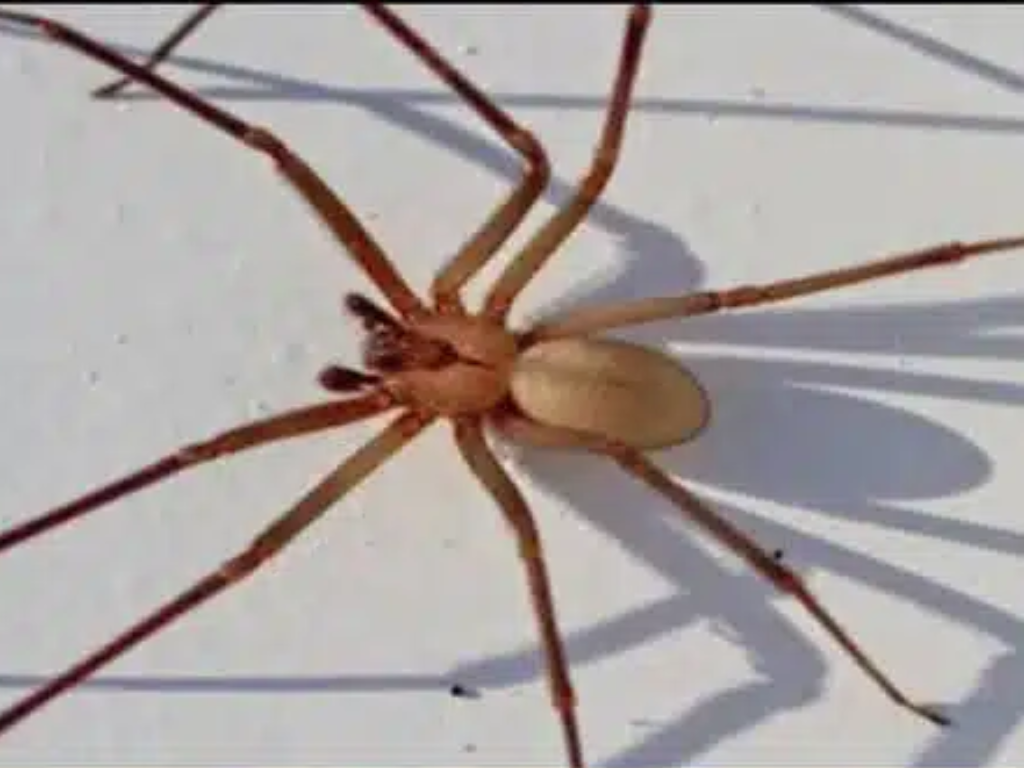
The Brown Recluse Spider: A Small Spider with a Violin-Shaped Mark on Its Body

Imagine a tiny spider, modestly brown in color, barely larger than a 10-cent coin, hiding away in some dim corner. What makes it truly distinctive? A unique violin-shaped marking adorning its back, giving rise to its nickname, the “violin spider.” This natural signature makes it an easily recognizable specimen for arachnid enthusiasts.
Generally measuring between 8 mm and 1.5 cm, this spider belongs to the genus Loxosceles. One particular trait sets it apart: it has only six eyes, whereas most spiders possess eight. Its velvety light brown body blends seamlessly with its surroundings, and it moves primarily at night with the stealth of a fleeting shadow.
A Rare Bite, but Potentially Serious

The brown recluse spider is not naturally aggressive. It prefers to flee or hide rather than attack. However, if it is startled, trapped, or crushed, it will not hesitate to bite. This is where complications may arise.
Its venom is cytotoxic, meaning it destroys the cells around the bite area. This can cause a severe skin lesion, sometimes accompanied by symptoms such as fever, vomiting, and in very rare cases, even more serious complications. The wound may take several weeks to heal and can occasionally leave permanent scars. Fortunately, these cases remain exceptional, especially when prompt medical care is obtained.
Its Presence in France: Myth or Reality?
Officially, the brown recluse spider is mostly found in the United States, particularly in the Midwest and southern regions, with populations also documented in Mexico and Canada. However, due to globalization and the volume of international shipments, it can occasionally travel unnoticed to France.
In recent years, several reports of suspicious bites have been recorded in certain French departments, such as Hérault and Meurthe-et-Moselle. Yet, according to experts, these bites are more likely attributable to a local relative: Loxosceles rufescens, another violin spider well established in France.
Its Favorite Hiding Places: Where to Find It?

The brown recluse spider truly lives up to its name: it seeks out dark, dry, and seldom-disturbed locations. Outdoors, it can be found under stones, in piles of wood, or among stacked dead leaves. Inside buildings, it favors quiet corners such as attics, garages, or even stored cardboard boxes.
This spider is rather solitary and discreet. Its web is irregular and not primarily used for hunting; instead, it lurks in the shadows, waiting for nightfall to emerge stealthily.
A Simple, Opportunistic Carnivorous Diet
The brown recluse spider is not picky when it comes to feeding: it mainly hunts insects such as crickets, cockroaches, and mosquitoes, and it will readily feed on already dead insect carcasses. Equipped with remarkable resilience, it can survive for several months without food or water, especially during winter when prey becomes scarce.
Discreet but Prolific Reproduction
The mating season begins in spring. Females can lay eggs up to five times a year, depositing around forty eggs each time inside a silky cocoon. After approximately one month, the young hatch and molt several times before reaching adulthood. A brown recluse spider can live up to two years, sheltered from view and away from light.
What to Do in Case of a Suspected Bite?
If you believe you have been bitten by a spider and the wound does not heal or worsens, it is essential to consult a healthcare professional promptly. In the event of a brown recluse (or related species) bite, swift medical intervention can significantly reduce the venom’s effects. Additionally, it is crucial to remain calm: seriously dangerous bites remain extremely rare.
The brown recluse spider does not pose a direct threat to humans, but it is wise not to disturb it. Invisible during the day and active at night, this spider inspires both fascination and apprehension. In France, its presence is possible but very uncommon, hence the need for utmost vigilance. After all, even the most discreet creatures can sometimes make a loud impact…

A Pricing Error That Affects Your Budget We don't always realize it, but pricing errors in supermarkets are far from Read more

This heartbreaking story touched millions of internet users. After a long eight months of disappearance, a dog finally reunited with Read more

A Visual Challenge That Sparks Thought This type of visual puzzle captivates through its dual effect: it sharpens observational skills, Read more

The Importance of Ventilating Your Home in Winter Indoor air that is overly saturated with humidity is not only uncomfortable Read more
Rosemary is a herb renowned not only for its fragrant aroma in cooking but also for its extensive health advantages, Read more
How Long Should You Warm Up Your Vehicle During Winter? Contrary to a widely held belief, only 30 seconds are Read more
That morning, you open your shutters... and suddenly, it is there. A white pigeon, motionless, perched on the windowsill, almost Read more
Ticks' Favorite Hiding Spots: Why Your Garden is Their Paradise Ticks have a distinct preference for damp, shaded, and poorly Read more

Rice Water and Baking Soda: A Surprising Duo to Unclog Your Drains Few people realize that the water used to Read more

Unwanted Houseguest: The Fly The fly is arguably the most disliked insect on Earth, primarily due to its bothersome traits. Read more

A Decision Born from Solitude Agnès did not make her decision lightly. For many years, she hoped for more frequent Read more
Diseases Transmitted by Ticks When we talk about ticks, Lyme disease immediately comes to mind, and for good reason. However, Read more

10 Secrets You Need to Know Before Eating Okra Okra, also known as “lady’s finger,” is a green, pod-shaped vegetable Read more

Corn silk, the delicate, hair-like strands that grow on an ear of corn, has a long history of use in Read more

Who among us would like to live in a stifled and dirty home, where unpleasant cooking odors and impurities invade Read more

Have you just stained a piece of clothing and don't know how to get rid of it? Rest assured, this Read more

House 1: A Warm Refuge Perched in the Trees If this suspended house has moved you, it reveals your deep Read more
The Brown Marmorated Stink Bugs: A Nuisance Difficult to Ignore Originating from Asia, these insects have found a favorable environment Read more

Many people make the mistake of believing that continuously boiling water will save energy once the kettle is already hot. Read more

The Power of Hawthorn (Genus Crataegus): A Natural Ally for Heart and Cholesterol Health Hawthorn, belonging to the genus Crataegus, Read more

Many families choose to place their washing machine in the bathroom to take advantage of the floor drain. However, it Read more

The Hidden Power of Pomegranate Peel: 10 Health Benefits and How to Use It Pomegranate is often celebrated for its Read more

Mullein (Verbascum thapsus), a tall, woolly plant often seen growing along roadsides and in open fields, has been treasured for Read more

An Invention Born from a Passion for Cooking At the end of the 19th century, the importance placed on healthy Read more

An Ordinary Object Turned Viral Mystery What sparked the excitement? A photo showing a long, curved object made of metal Read more

When you enter a hotel room, have you ever noticed that long piece of fabric laid across the foot of Read more

Risks Associated with Using Boiling Water in Plumbing Premature Deterioration of Materials Frequently pouring boiling water down your sink can Read more

Embracing Organic Gardening with Homemade Onion Elixir The shifting trends in horticulture are leaning heavily towards eco-conscious choices, prompting gardeners Read more

White Clover (Trifolium repens): 15 Benefits and Homemade Uses White clover (Trifolium repens) is more than just a common plant Read more

Challenges in Organizing the Perfect Encounter In today’s era dominated by dating apps, one might easily assume that arranging a Read more

Understanding, anticipating, and supporting your dog through every stage of their life is essential to providing them with the best Read more

A Charming Renaissance Step One: Thorough Cleaning and Preparation Before starting the transformation, the dresser needed to be meticulously cleaned: Read more

Guava is often hailed as a superfruit, but did you know that its leaves also pack an extraordinary punch in Read more

The Risks Associated with Excessive Screen Exposure Prolonged exposure to screens can have serious consequences on the overall development of Read more

What Is the Purpose of That Small Panel on Your Car? While heavy vehicles like trucks are equipped with clearly Read more

Shepherd’s Purse (Capsella bursa-pastoris): A Medicinal Herb with Powerful Benefits Shepherd’s Purse, known botanically as Capsella bursa-pastoris, is a small, Read more

The Fascination of Pareidolia: When Our Minds Discern Faces Where None Exist This captivating phenomenon is known as pareidolia. It Read more

Gather and Verify Evidence Immediately When faced with a vending machine that fails to dispense the cash you requested, it Read more
Born in 1951, 61, 71, 81, 91, 01, 11, 12…: An Untamable Competitive Spirit If the last digit of your Read more
A Cry in the Face of an Unexpected Mystery Startled, the man let out an involuntary cry upon discovering what Read more
