
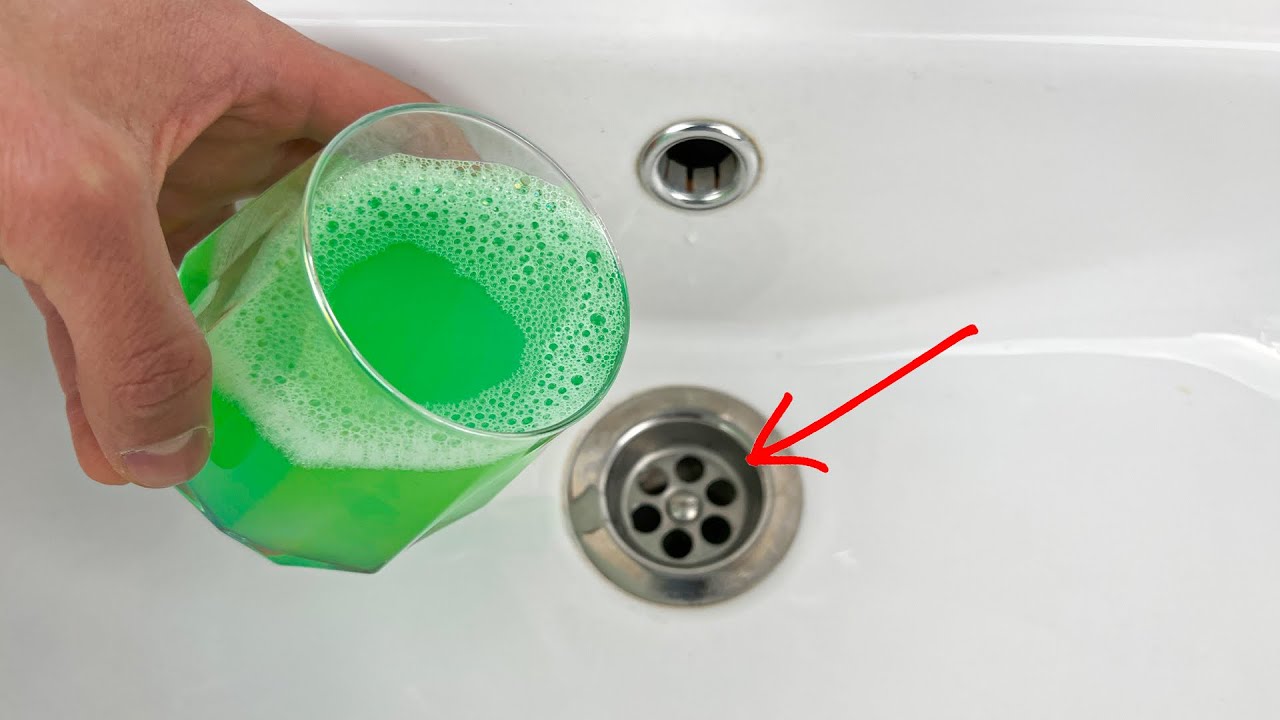
If your sink, bathtub, or shower is draining slowly and you don’t have access to a commercial drain opener, you can create a simple, environmentally friendly drain cleaner using common pantry ingredients. This natural method is gentler than many chemical alternatives, affordable, and often effective at clearing minor blockages. For more severe clogs, this technique can serve as a preliminary step before moving on to stronger solutions.
What You’ll Need
Equipment
Cup (to scoop out standing water)
Bucket (to collect the water removed)
Drain stopper (optional, helps direct the reaction downwards)
Ingredients
Boiling water
1/2 cup baking soda
1/2 cup distilled white vinegar
How to Make and Use a DIY Drain Cleaner
1) Remove Standing Water
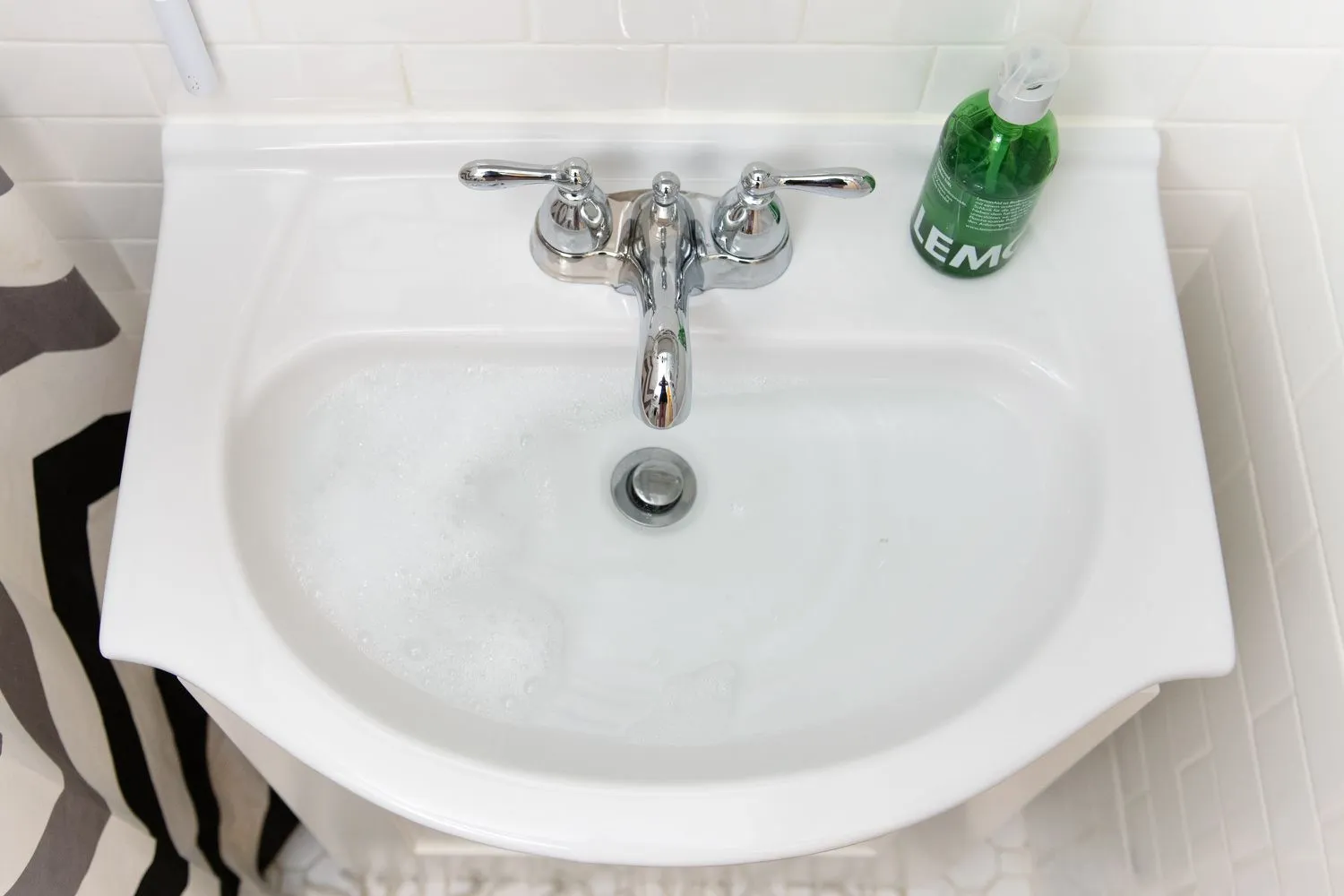
Start by removing as much of the backed-up water as possible using a cup and transfer it into a bucket. It’s fine if a little water remains in the drain opening, but the majority of the sink, tub, or shower should be empty to allow the mixture to reach the clog more effectively.
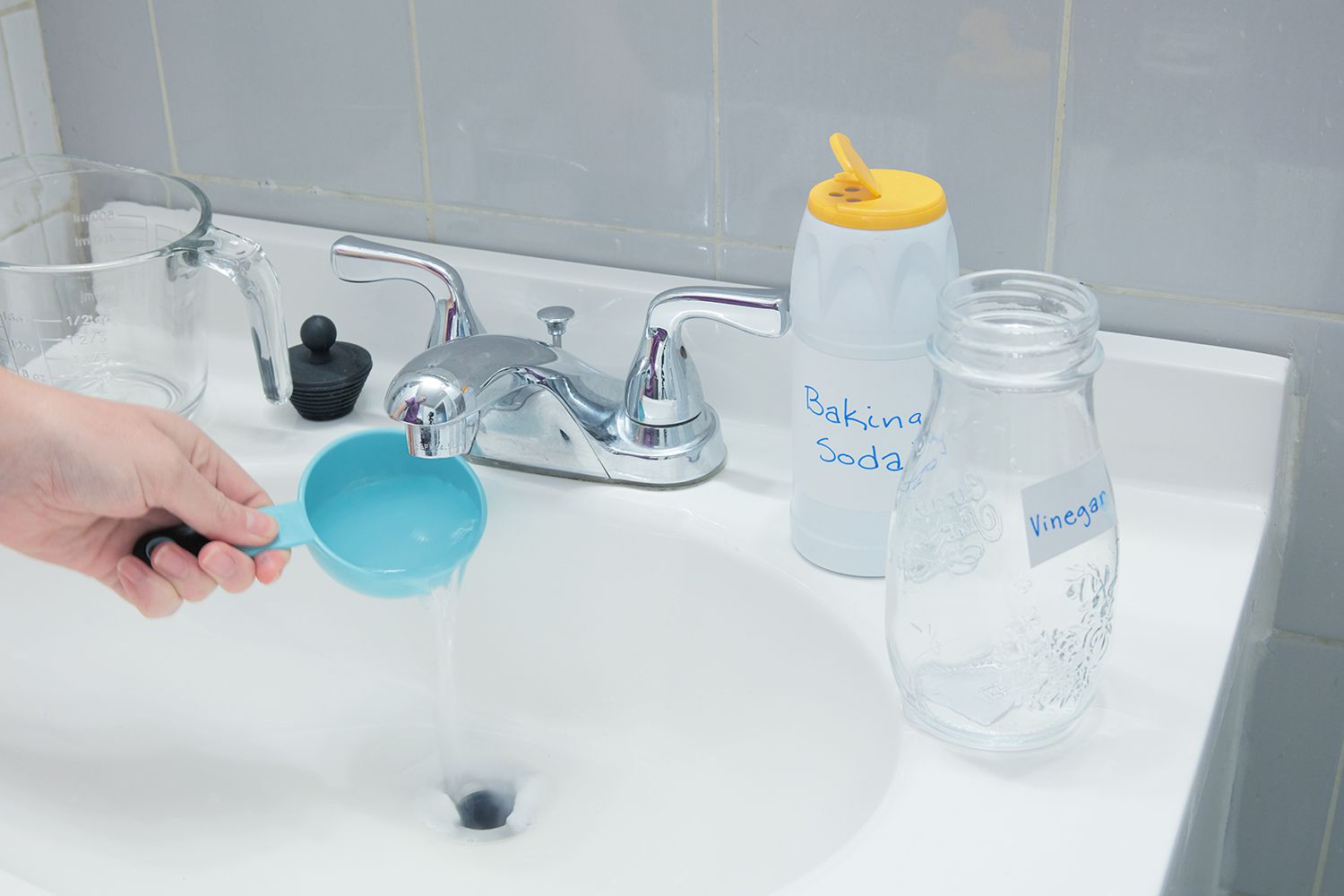
2) Pour in Boiling Water
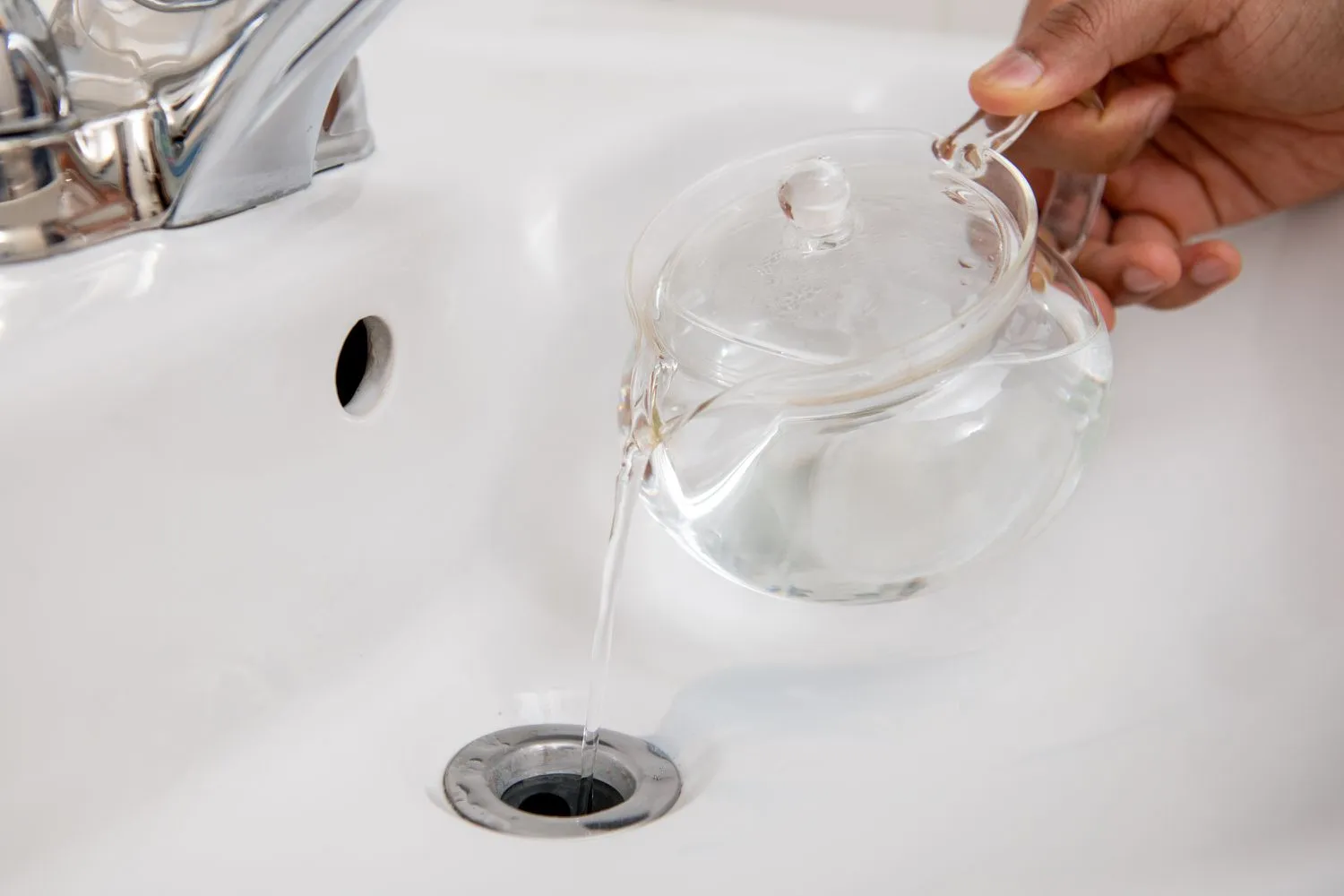
If possible, remove components like the sink pop-up or tub stopper to gain better access to the drain. Slowly pour a small pot of boiling water into the drain to help loosen grease, soap scum, and grime buildup.
Safety Note
Warning: Always pour boiling water slowly to prevent splashes or burns, especially in smaller basins where spills are more likely.
3) Add Baking Soda
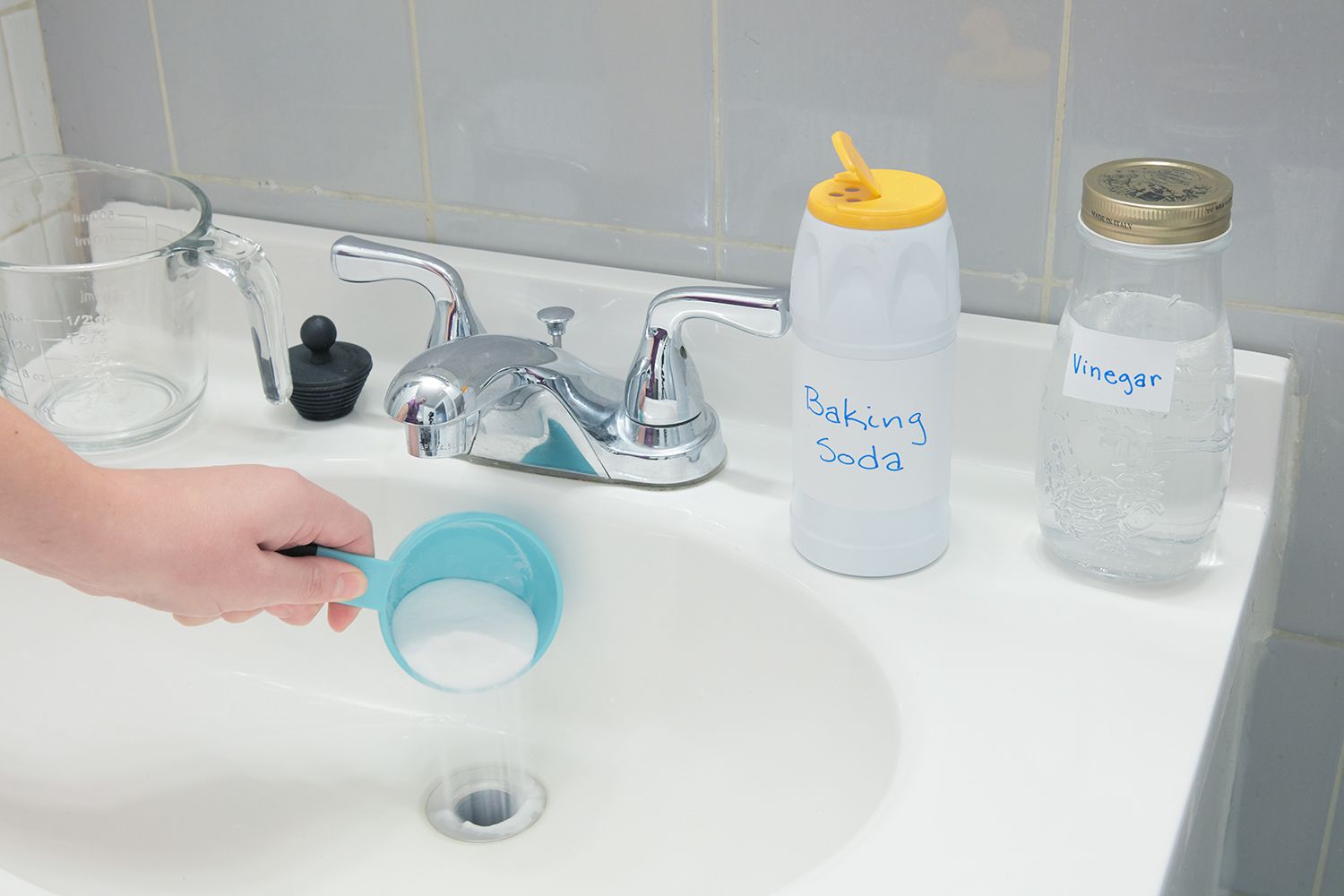
Measure out 1/2 cup of baking soda and pour it directly into the drain opening. Aim to get as much of the powder into the drain itself rather than letting it fall onto the sink surface.
4) Add Vinegar
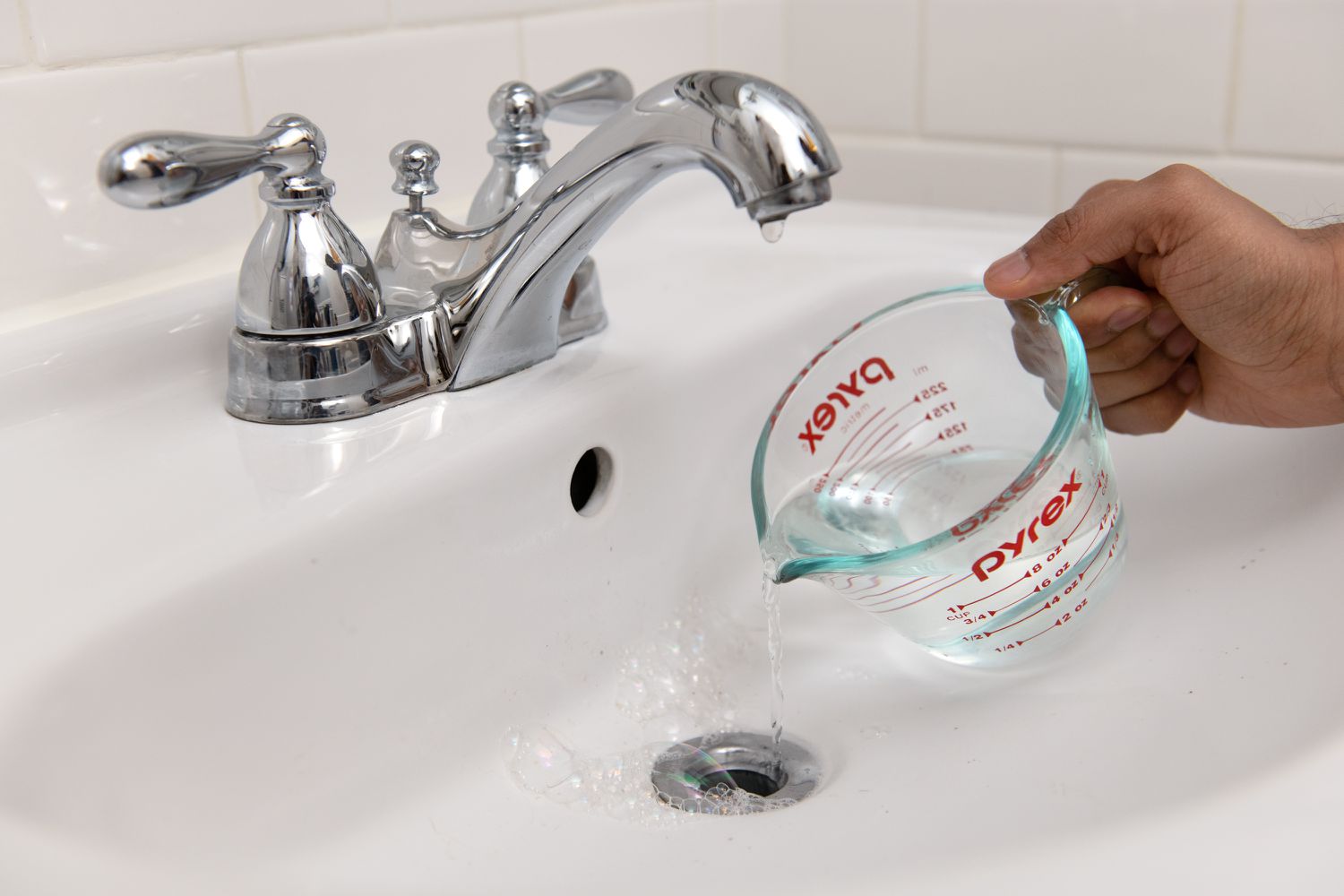
Slowly pour 1/2 cup of distilled white vinegar into the drain. The mixture will start to fizz and bubble vigorously—this chemical reaction works to break down grime and loosen minor clogs.
5) Cover the Drain and Wait
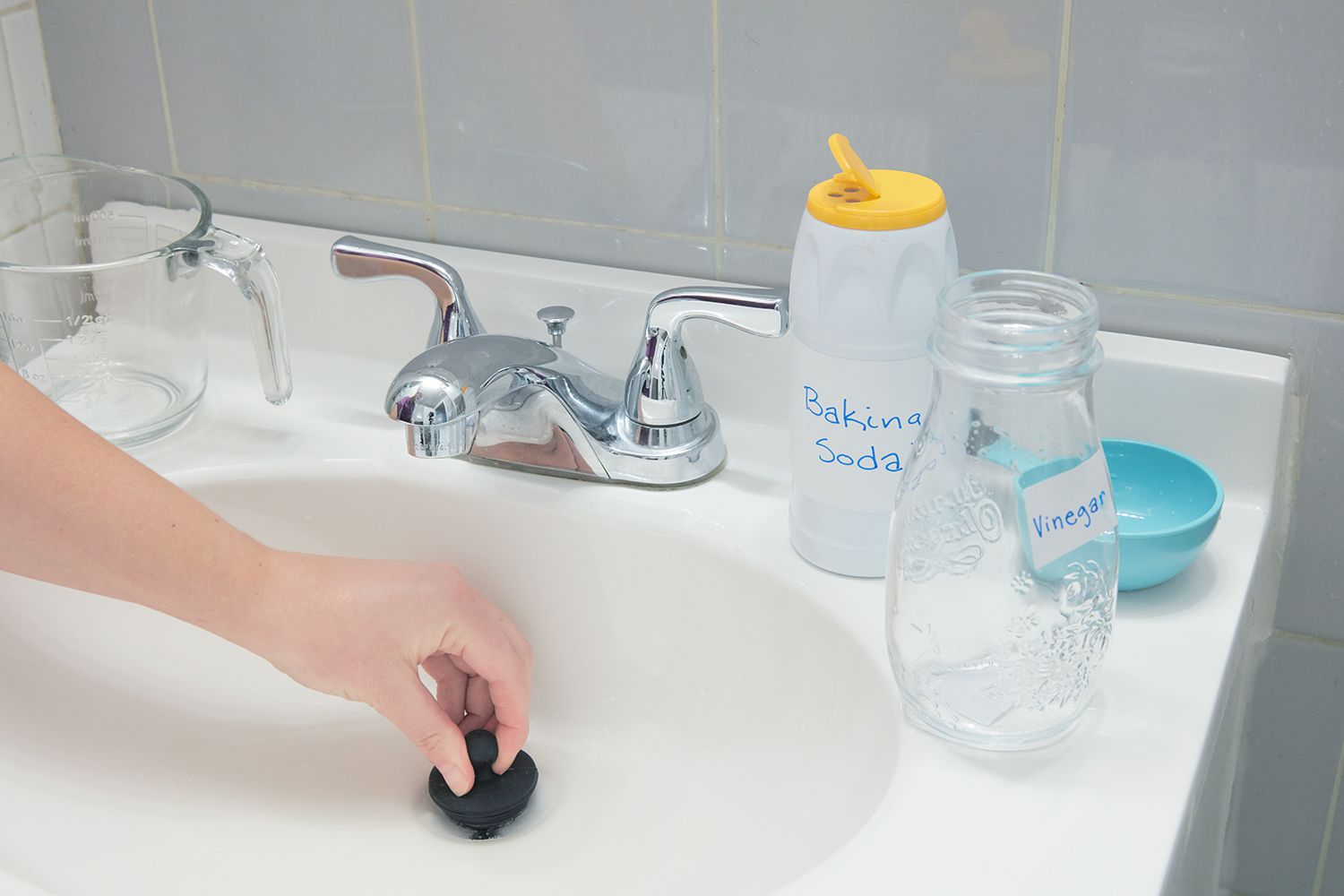
For a more effective result, cover the drain with a stopper or plug and allow the fizzing to work for about 10 minutes. Sealing the drain helps push the reaction downward into the clog instead of letting the bubbles escape upward. This step is optional but highly recommended.
6) Flush with More Boiling Water
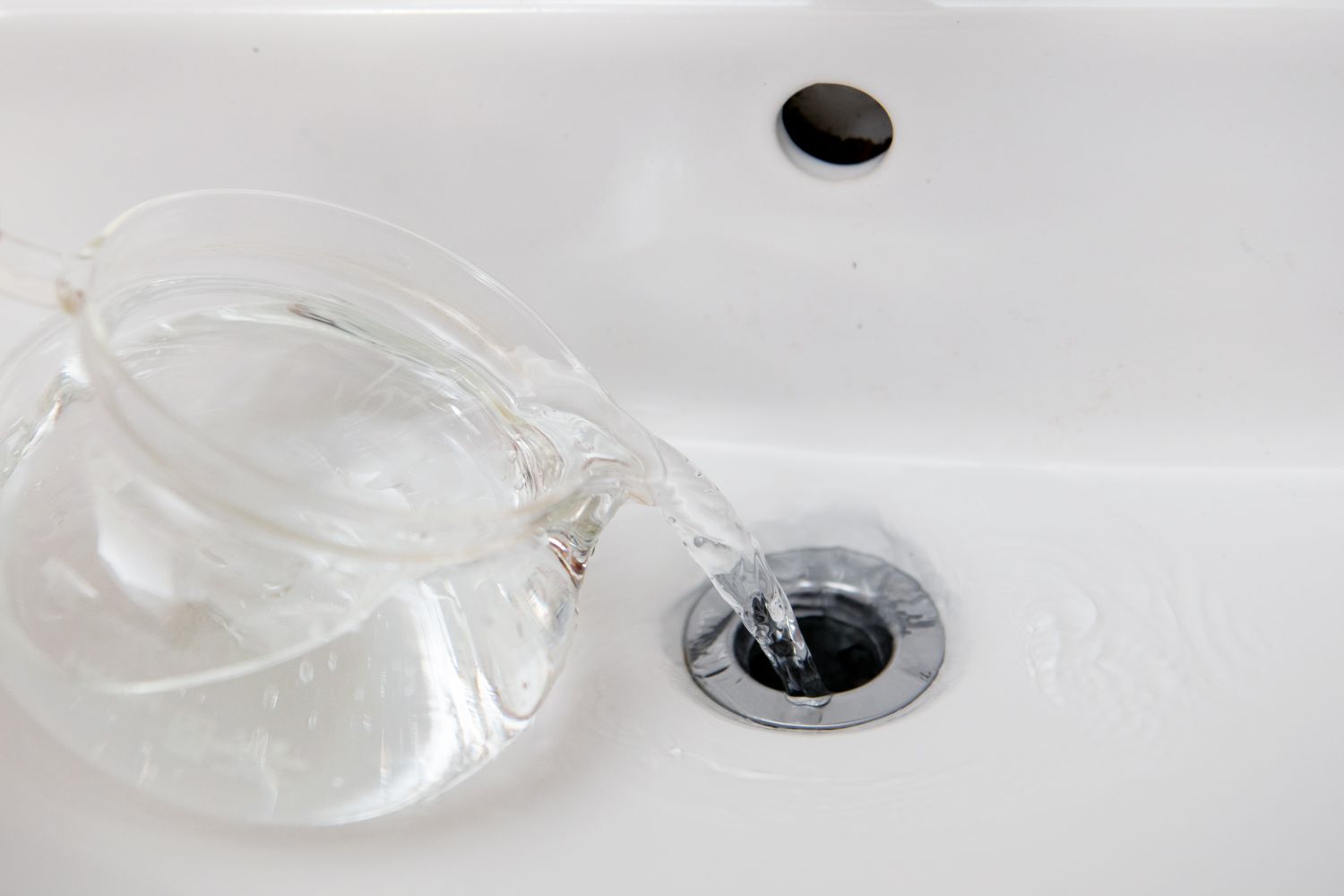
After waiting the full 10 minutes, pour another pot of boiling water into the drain. This rinses away the loosened debris and helps push any remaining residue through the plumbing.
7) Rinse with Hot Tap Water
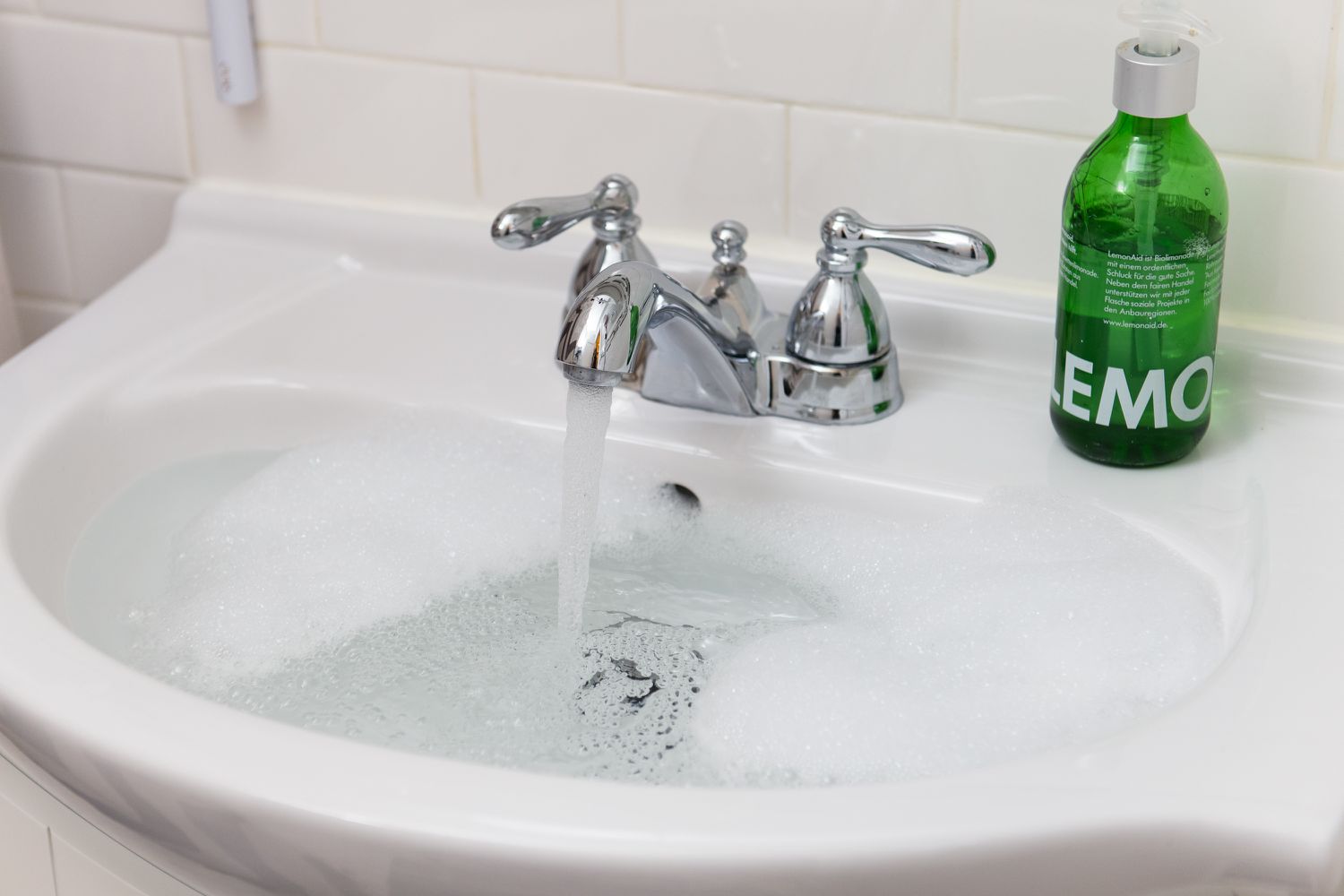
Finally, run hot tap water for one to two minutes to clear out any lingering particles and verify that the drain is flowing smoothly again.
8) Repeat if Needed
If the drain shows improvement but still drains slowly, repeat the entire process once more. However, if there is no noticeable change after a couple of attempts, the clog may be too severe for this natural method to resolve.
Alternative Homemade Drain Cleaner Ideas
These alternatives are ideal for minor clogs or slow-draining pipes:
Baking Soda and Lemon Juice: Combine 1/2 cup baking soda with 1/2 cup lemon juice, let it sit for 1 hour, then flush with boiling water to clear the drain.
Baking Soda and Salt: Mix 1/2 cup baking soda with 1/2 cup salt, wait at least 1 hour, then rinse with boiling water for a natural cleaning boost.
Dish Soap and Hot Water: Add a few drops of grease-cutting dish soap directly into the drain, followed by a flush of very hot water to help dissolve greasy buildups.
Borax, Vinegar, and Salt: Mix equal parts (1/4 cup each) of borax, vinegar, and salt, pour the mixture into the drain, add boiling water, let it sit for an hour, then flush again.
Cream of Tartar, Baking Soda, and Salt: Start by flushing the drain with boiling water. Next, apply a paste made from cream of tartar and baking soda, allow it to sit for an hour, then rinse thoroughly to clear buildup.
How to Keep Drains Clear Longer
To prevent future clogs, regularly remove visible debris such as hair, food scraps, and soap scum from your drains every week or two. If hair or food remains a persistent issue, consider installing a drain cover to catch debris before it enters the plumbing. Address slow draining immediately—small accumulations of buildup are much simpler to remediate than fully formed blockages.
Other Solutions to Try
If the clog refuses to clear, stronger tools might be necessary. A wet-dry vacuum can sometimes extract the blockage more effectively than a plunger, especially if you create a tight seal around the drain. Using a drain snake can help break up or retrieve trapped debris as well. When accessing the trap under the sink, place a bucket underneath first to catch any water or grime that may spill out.
When to Call a Professional
If all else fails and water remains completely blocked, or if clogs keep recurring despite your efforts, it may be time to contact a plumber. Unusual gurgling noises, persistent bubbling, or foul odors are signs there could be a more serious underlying problem. While home remedies can resolve simple drain issues, a professional can accurately diagnose the root cause and provide lasting repairs.
FAQ
How do you prevent drains from clogging?
Regularly remove hair, food particles, and other debris from your drains. Flushing drains periodically with hot water and addressing slow drainage early helps prevent buildup from hardening into stubborn clogs.
What causes clogged drains?
The most common causes include hair, soap scum, grease deposits, food particles, mineral accumulation, dirt, and small foreign objects. Over time, these substances combine and lodge within pipes, leading to blockages.
Can you use too much baking soda and vinegar?
Yes, using excessive amounts may create a thick paste that worsens the clog instead of clearing it. It is best to use about 1/2 cup of each to avoid this issue.
Will hydrogen peroxide unclog a drain?
Some people try hydrogen peroxide as a quick fix, but its effectiveness varies. If you choose to use it, apply sparingly and avoid regular use, as results are not consistently reliable.

A Heartbreaking Message Lilo, a gentle and affectionate dog, was found wandering with a leash around her neck and a Read more
An Unexpected Nutritional Treasure in Your Own Garden Amaranth, often referred to as the "wild spinach", far exceeds its role Read more

A Pricing Error That Affects Your Budget We don't always realize it, but pricing errors in supermarkets are far from Read more

Horseweed (Erigeron canadensis): 20 Amazing Benefits and How to Use It Horseweed, also known as Erigeron canadensis or Canadian fleabane, Read more

White Clover (Trifolium repens): 15 Benefits and Homemade Uses White clover (Trifolium repens) is more than just a common plant Read more

The Daisy: An Expression of Joyful Living and Authenticity If you find yourself especially captivated by the daisy, it is Read more

Perfumed Tissues: An Easy DIY Technique The Joy of Scented Tissues: Paper tissues are handy in daily life. While some Read more
How to Make Powerful Super Glue from Styrofoam: The Hidden Chemistry Behind This Viral Trick In a world where DIY Read more
From Military Origins to Artistic Expression Originally, the twirling baton was primarily a tool designed to organize military marches and Read more

Why Ventilating in the Morning Can Harm Indoor Air Quality During Winter On a chilly winter morning, the outdoor air Read more

The Power of Hawthorn (Genus Crataegus): A Natural Ally for Heart and Cholesterol Health Hawthorn, belonging to the genus Crataegus, Read more

Tomatoes, a staple in kitchens worldwide, are loved for their versatility and rich flavor. However, their perishable nature often leads Read more
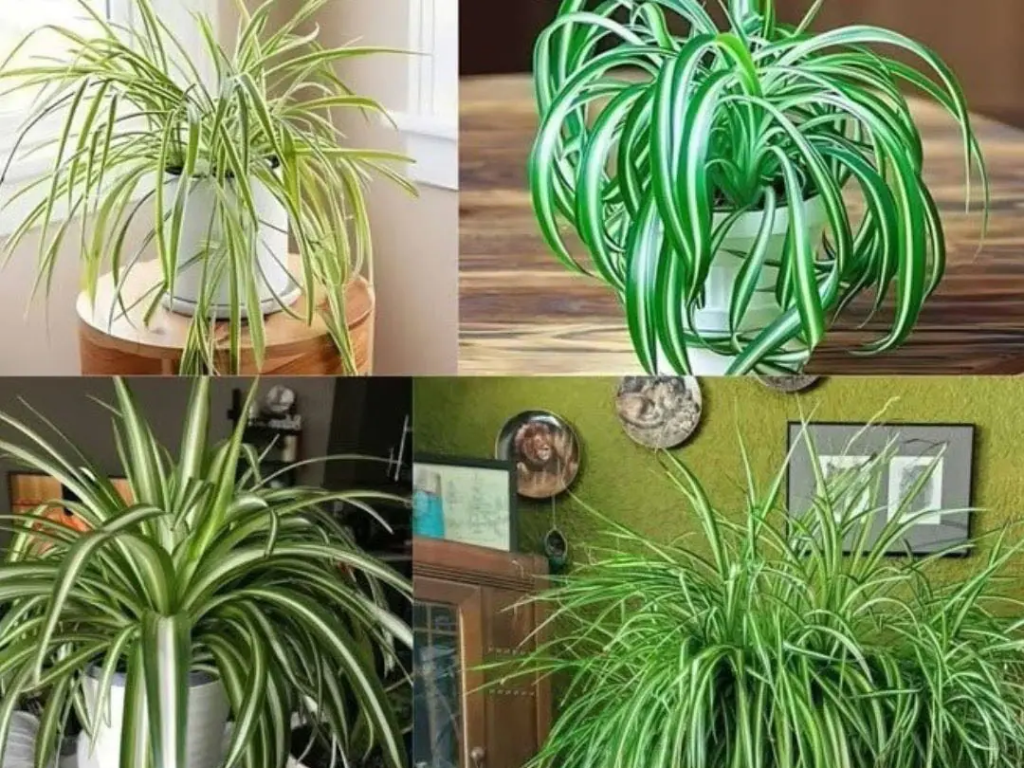
A Natural Ally for a Healthier and More Pleasant Home We admire the spider plant for its delicate and soothing Read more

The Secondary Microphone: A Filter Against Noise Pollution Most modern smartphones incorporate multiple microphones, including a secondary one often hidden Read more
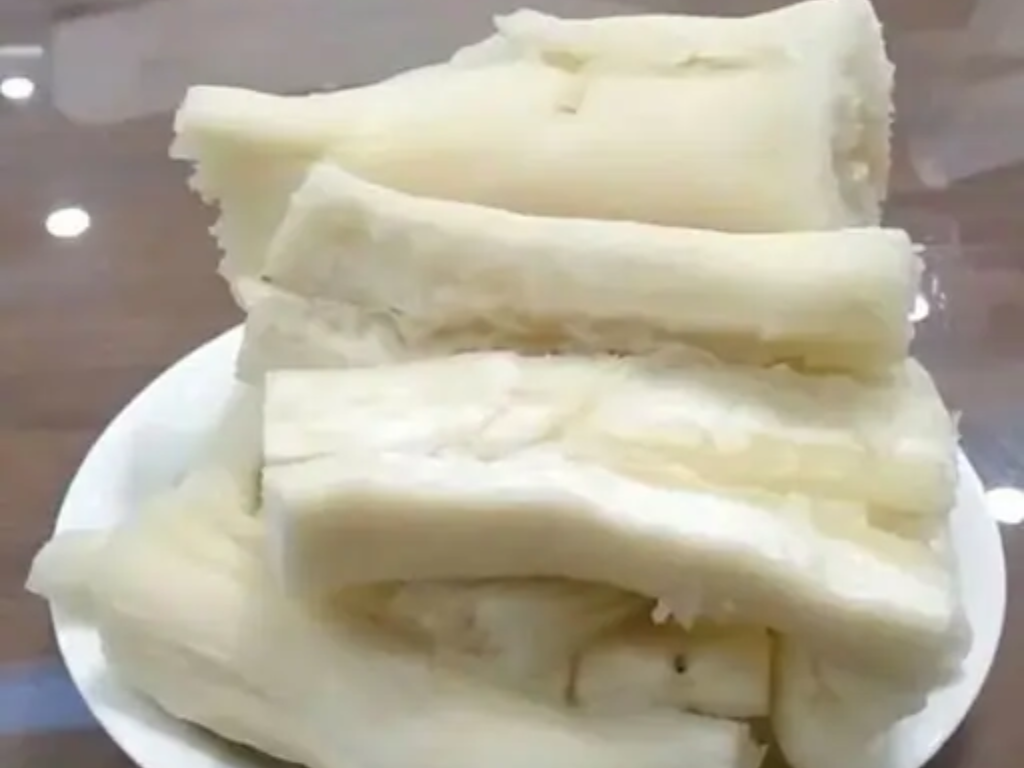
Cassava: An Essential Plant at the Heart of a Deadly Paradox Whether in the form of flour, tapioca pearls, or Read more

Kyllinga brevifolia: A Natural Remedy for Health and Wellness Kyllinga brevifolia, commonly known as green kyllinga or shortleaf spikesedge, is Read more
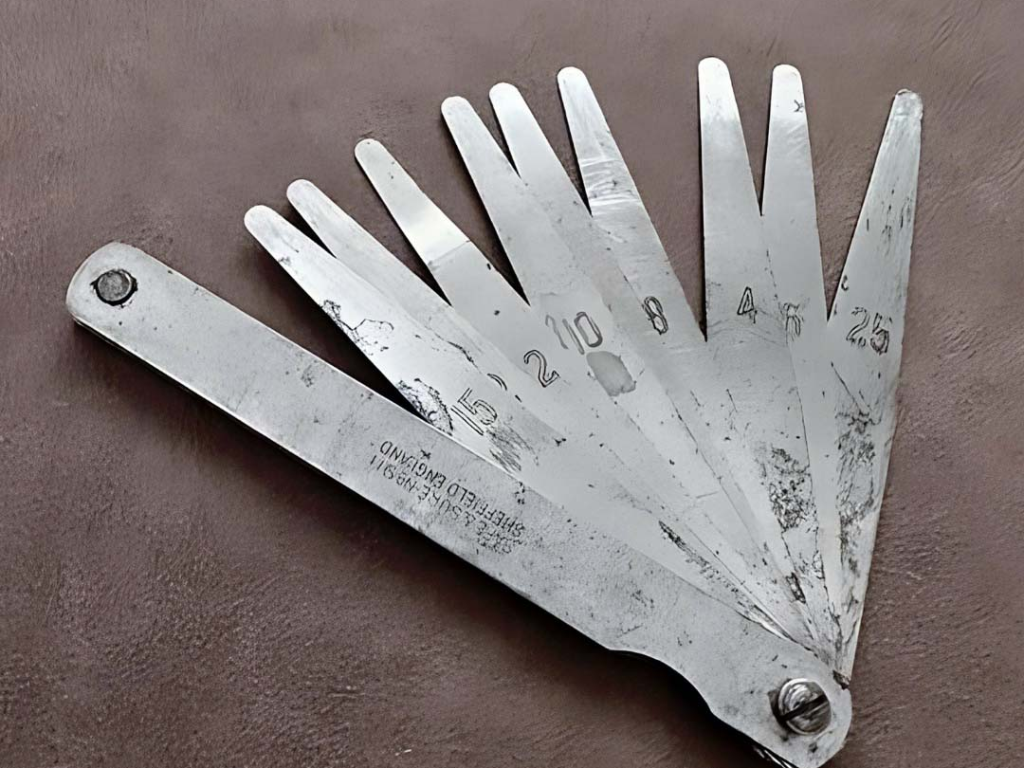
Why is the Thickness Gauge Still Essential? The thickness gauge is far more than just an accessory; it proves to Read more

Mullein (Verbascum thapsus), a tall, woolly plant often seen growing along roadsides and in open fields, has been treasured for Read more

Euphorbia hirta, commonly known as the “Asthma-plant,” is a medicinal herb renowned in traditional medicine for its diverse health benefits, Read more
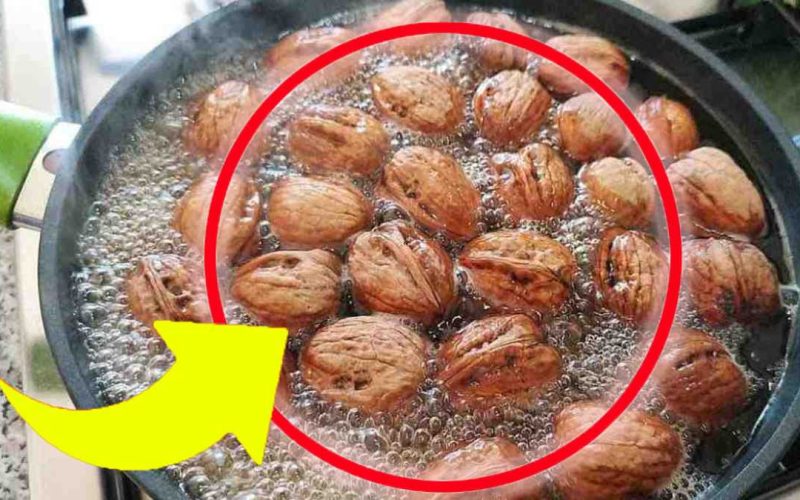
Some people purchase walnuts that are already shelled, while others prefer to buy them in their natural state, still in Read more

The Art of Container Flower Combinations Designing with flowers in pots is a delightful blend of horticulture and floral design. Read more
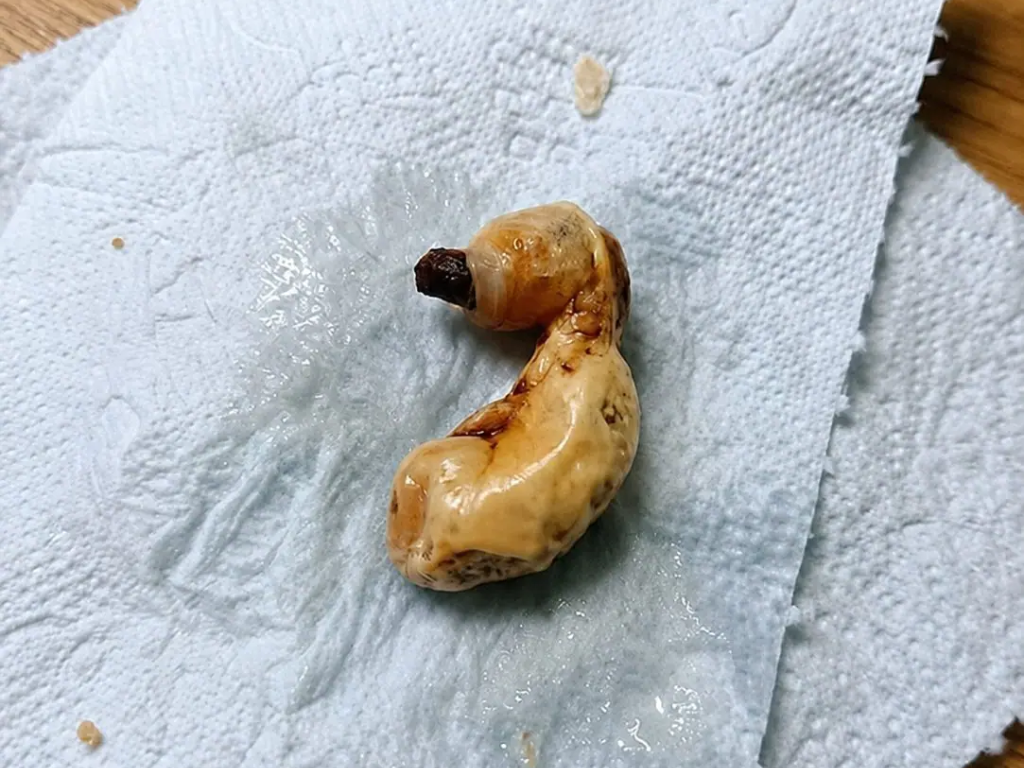
When a Simple Pistachio Shell Takes on the Appearance of a Monster It all begins with the desire to clean Read more

One day, almost by chance, he pushed open the doors of an orphanage. It was there that he met Emma. Read more
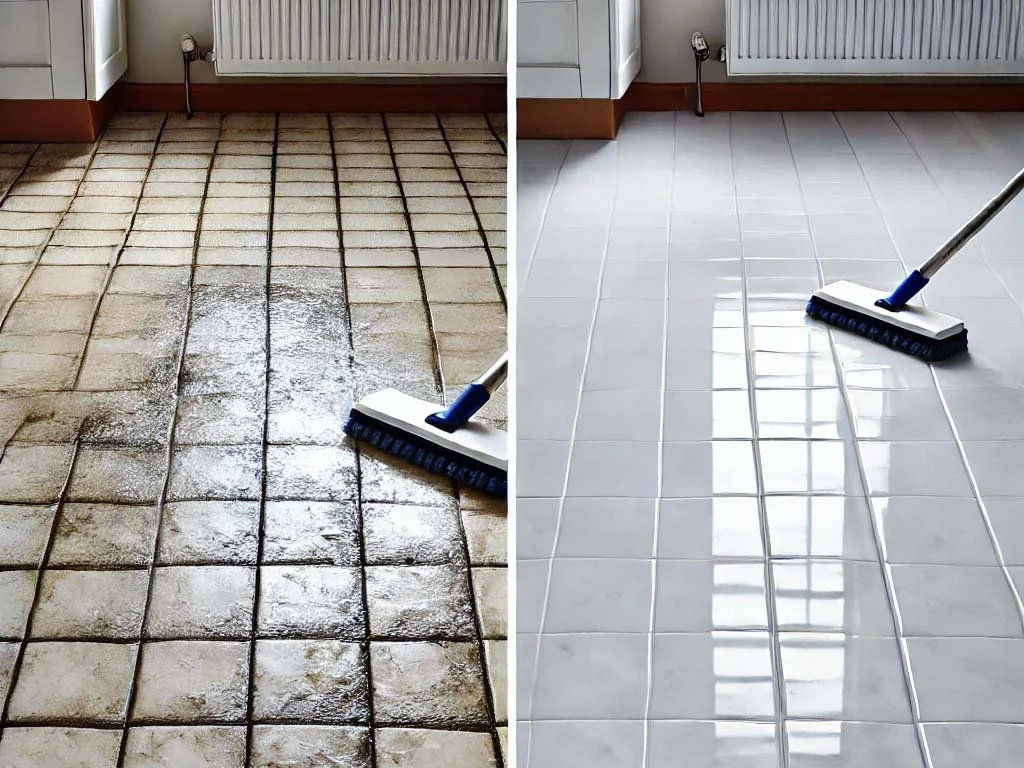
Why Traditional Household Cleaners Aren't Enough Often praised for their effectiveness, commercial cleaning products don't always succeed in removing stubborn Read more
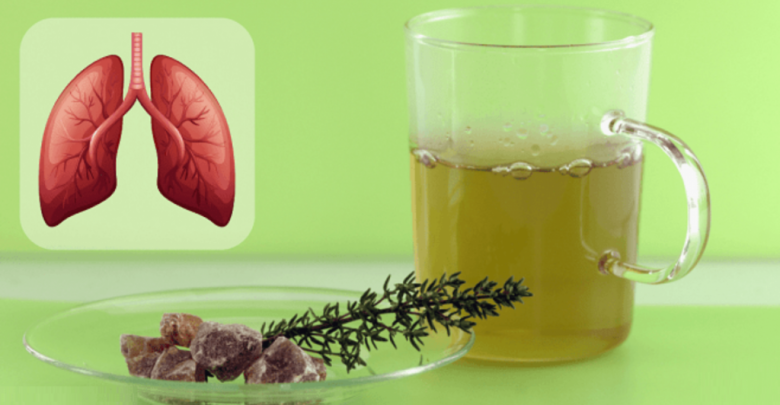
Thyme is known by some as the "enemy of toxins," a reputation that dates back to stories from ancient Greece. Read more

Sida acuta, also known as “common wireweed,” is a hardy plant often found in fields and roadsides. While it may Read more

When Affection Triumphs Over Blood Ties Sharaine and Wilson Caraballo, warm-hearted parents of a large family with five children, opened Read more

The Benefits of Combining Eggs and Coffee: A Nutritious and Energizing Pair When it comes to starting your day right, Read more
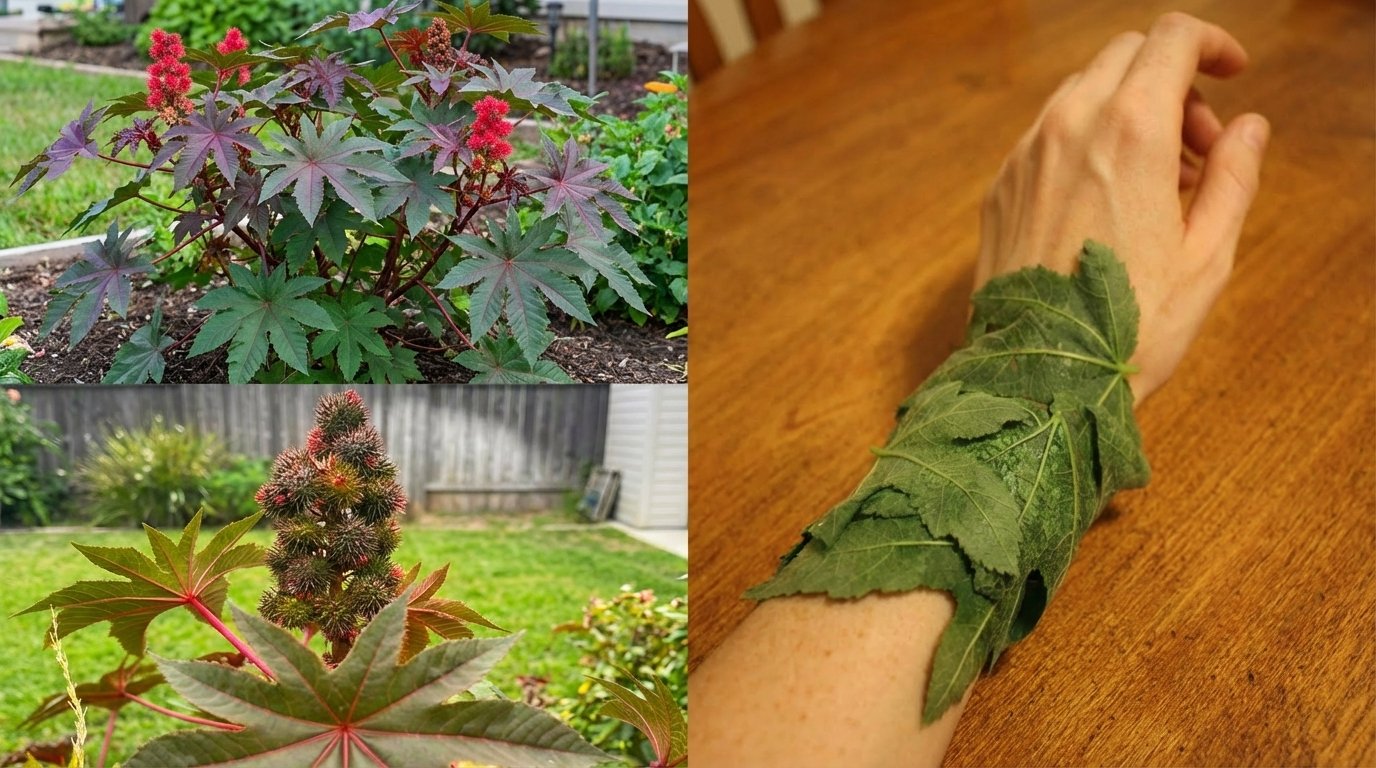
The castor plant (Ricinus communis) is widely known for its seeds, which are the source of castor oil. However, its Read more
Grease buildup on kitchen cabinets is a widespread issue that many homeowners encounter. Frequent cooking results in grease splatters that Read more

Why does your sleep become fragile precisely between 3 a.m. and 5 a.m.? Is it due to a peculiarity of Read more

Dented Car Body: How to Fix It Yourself Over time, the body of your car can endure a lot. From Read more
These tiny parasites can send shivers down your spine just by mentioning them. Whether on your skin or that of Read more

We experienced several miscarriages. Each time, it was a silent grief, almost invisible to the eyes of others. I learned Read more
What Is the Purpose of the Overflow Hole in a Sink? The small, often overlooked hole located near the edge Read more

Unveiling the Secrets of Burning Bay Leaves in Your Home The age-old tradition of burning bay leaves, once prevalent in Read more

Before your next journey, it might be worth reexamining some of your packing habits. What a luggage professional has revealed Read more

Unwanted Houseguest: The Fly The fly is arguably the most disliked insect on Earth, primarily due to its bothersome traits. Read more

Crabgrass, or Digitaria sanguinalis, is often regarded as an annoying, invasive weed in gardens and urban spaces. However, beneath its reputation Read more
Ingenious Uses for Expired Cornstarch A Natural Cleaner for Windows and Surfaces Did you know that cornstarch can easily substitute Read more
