
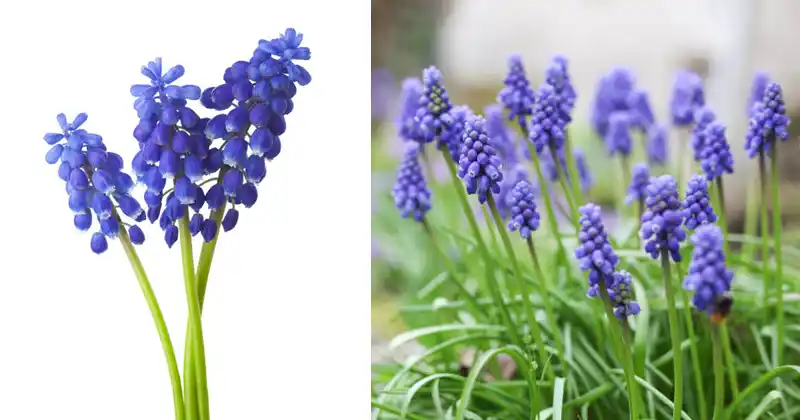
Grape Hyacinth (Muscari): A Beautiful Flower You Can Eat – But Only If You Know Which One
The grape hyacinth, known scientifically as Muscari, is a charming spring-blooming flower often mistaken for true hyacinths. With its tightly packed clusters of deep blue or purple bell-shaped flowers that resemble miniature grapes, this plant brightens up gardens, walkways, and wild landscapes across many regions. But beyond its visual appeal, some varieties of Muscari have an unexpected and lesser-known characteristic: they are edible. However, caution is crucial—because not all species of Muscari are safe for consumption.
1. What Are Grape Hyacinths?
Grape hyacinths belong to the Asparagaceae family and typically bloom in early to mid-spring. Despite the name, they are not true hyacinths but share some visual similarities. The most common type is Muscari armeniacum, beloved for its vibrant blue hue and compact size.
These flowers are often grown for ornamental purposes. They naturalize easily and spread year after year, requiring minimal care, which makes them a favorite among both beginner and experienced gardeners.
2. Yes, Some Grape Hyacinths Are Edible
It might surprise many to learn that a few species of grape hyacinth are not just decorative—they’re also edible. In particular, Muscari comosum, also known as tassel hyacinth or edible muscari, has been used in traditional Mediterranean cooking for centuries. In Italy, it’s even known as “lampascioni” and enjoyed as a regional delicacy.
The edible part is the bulb, which resembles a small onion and contains a unique blend of bitter and earthy flavors. These bulbs are typically boiled to reduce bitterness, then preserved in oil or vinegar, or included in salads, frittatas, and stews.
3. Important Warning: Know Your Species
While Muscari comosum is edible, other common types like Muscari armeniacum and Muscari botryoides are not recommended for consumption. They contain saponins and other compounds that can cause stomach discomfort and are considered mildly toxic when eaten in significant quantities.
To safely enjoy edible grape hyacinths:
- Make sure you have correctly identified Muscari comosum.
- Avoid consuming ornamental varieties bought from nurseries, as they may have been treated with chemicals.
- When in doubt, consult a botanist or plant expert.
4. How to Harvest and Prepare Lampascioni
If you’ve confirmed you have Muscari comosum, harvesting should be done in the fall after the foliage has died back. The bulbs are usually small and grow close to the surface, making them easy to lift with a garden fork.
Here’s how to prepare them:
- Clean thoroughly to remove dirt and outer layers.
- Boil in several changes of water to reduce bitterness.
- Pickle or sauté in olive oil with herbs and garlic for a flavorful addition to meals.
Their taste is distinctive—slightly pungent, mildly bitter, and quite aromatic.
5. Ornamental Value and Companion Planting
Aside from their culinary potential, grape hyacinths are an excellent choice for adding color and texture to spring gardens. They pair well with tulips and daffodils, often planted together for an eye-catching display. Their small stature makes them ideal for borders, rock gardens, and even container planting.
They also help deter pests like deer and rabbits, and their nectar attracts early pollinators.
6. Final Thoughts
Grape hyacinths are much more than a pretty face in the springtime garden. With the right knowledge and identification skills, Muscari comosum can be a delightful and unusual addition to your kitchen repertoire. But remember—the line between edible and toxic is thin, so always ensure correct identification before sampling any wild or garden-grown plants.
So next spring, when you spot that sea of blue blooms, take a moment to wonder: is there a secret culinary treasure hiding beneath the soil?

Horseweed (Erigeron canadensis): 20 Amazing Benefits and How to Use It Horseweed, also known as Erigeron canadensis or Canadian fleabane, Read more

When you enter a hotel room, have you ever noticed that long piece of fabric laid across the foot of Read more

Juniper, a versatile and aromatic plant, has been valued for centuries for its culinary, medicinal, and therapeutic uses. Known for Read more

Lactuca serriola, commonly known as prickly lettuce, is a plant that often goes unnoticed, dismissed as a mere weed. However, Read more
Are Lilacs Edible? Health Benefits of the Beautiful Syringa Blossoms With their sweet fragrance and delicate clusters of flowers, lilacs Read more

The ingenuity of Swedish furniture design, particularly evident in the flat-pack phenomenon, has transformed how we furnish our homes with Read more

Bathroom Mold: Causes and Solutions Ideal Environment for Mold Growth Bathroom surfaces are prime locations for mold growth. Moisture accumulates Read more

Sweet Violet (Viola odorata): 25 Incredible Benefits & How to Use It Sweet violet (Viola odorata), also known as wood Read more

White Clover (Trifolium repens): 15 Benefits and Homemade Uses White clover (Trifolium repens) is more than just a common plant Read more

Mimosa Pudica, commonly known as the “Sensitive Plant” or “Touch-Me-Not,” is famous for its unique reaction to touch—its leaves fold Read more
Garlic: An Ancient Remedy for Better Sleep Since ancient times, garlic has been recognized not only as an essential culinary Read more

Tackling Dog Urine Odor: A Comprehensive Guide The joy of having a canine companion is undeniable, but alongside it come Read more

10 Secrets You Need to Know Before Eating Okra Okra, also known as “lady’s finger,” is a green, pod-shaped vegetable Read more
When a Simple Pistachio Shell Takes on the Appearance of a Monster It all begins with the desire to clean Read more

Avocados are celebrated for their creamy texture, rich flavor, and numerous health benefits. While typically enjoyed raw, grilling avocados introduces Read more

You bought a bag of potatoes, and a few weeks later, you find that they’ve started to sprout? Don’t panic! Read more

The Amazing Benefits of Sumac and How to Use It Sumac is more than just a flavorful spice—it’s a powerful Read more

Unlocking the Garden Potential of Eggshells: 10 Innovative Applications Eggshells, often seen as fragile protectors of eggs, are also a Read more
Discover the Untapped Potential of Chili Pepper Leaves: Nutritional Powerhouse for Your Health and Kitchen When you think of chili Read more

Datura stramonium, commonly known as Jimson weed, thorn apple, or devil's trumpet, is a plant native to North America but Read more

The Dog's Nose: A True Superpower It is well known that dogs possess an extraordinary sense of smell. Yet the Read more

Thyme is known by some as the “enemy of toxins,” and it has been part of stories since ancient Greece. Read more

Cultivating veggies and herbs indoors is more than just a productive task; it's a delightful and aesthetic journey. The magic Read more
Baking soda and lemon peels are two household items often overlooked but incredibly powerful when combined. This natural duo can Read more
The Hidden Power of Dog Rose (Rosa canina): 10 Surprising Health Benefits and How to Use It Nature has given Read more
Individuals with Allergies or Sensitivities If you suffer from allergies, it is important to be cautious with avocado! This fruit Read more

Often, due to poor ventilation or certain climatic conditions, dreaded mold can develop on the walls of our homes. In Read more

Kyllinga brevifolia: A Natural Remedy for Health and Wellness Kyllinga brevifolia, commonly known as green kyllinga or shortleaf spikesedge, is Read more

Sida acuta, also known as “common wireweed,” is a hardy plant often found in fields and roadsides. While it may Read more

Perfumed Tissues: An Easy DIY Technique The Joy of Scented Tissues: Paper tissues are handy in daily life. While some Read more

Clogged Shower Drain? Try Baking Soda! Experiencing a stagnant pool of water after a refreshing shower can be a mood Read more

How to Clean a Glass Shower Door Naturally and Keep It Shining Longer Several areas of the bathroom are exposed Read more

Tomatoes, a staple in kitchens worldwide, are loved for their versatility and rich flavor. However, their perishable nature often leads Read more

Purslane (Verdolaga) is no longer a garden menace but a valuable gem! This remarkable plant is reclaiming its place in Read more

Ever wish your home could keep that fresh, clean scent for more than a few hours? There’s a simple, natural Read more

Highland flowers, often found in remote, elevated regions, are more than just a visual delight. These resilient blooms, thriving in Read more

A Vibrant Coat, More Than Just a Visual Trait Before delving into the nature of these cats, let us first Read more

In today's digital age, it's a common sight in households and offices: chargers left in outlets without their corresponding devices. Read more

The Power of Hawthorn (Genus Crataegus): A Natural Ally for Heart and Cholesterol Health Hawthorn, belonging to the genus Crataegus, Read more

Why does your sleep become fragile precisely between 3 a.m. and 5 a.m.? Is it due to a peculiarity of Read more
