
Warning: The information provided in this article is solely for educational and informational purposes. It is based on traditional herbal uses and general botanical knowledge and does not replace professional medical advice, diagnosis, or treatment. We disclaim any responsibility for consequences, side effects, or health issues that may arise from harvesting, preparing, or using the plants or homemade remedies described here. Wild plants can be easily confused, and natural herbs may cause strong reactions or interact dangerously with prescription medications. Always consult a qualified healthcare professional, physician, or certified herbalist before starting any new herbal preparation, especially if you have a medical condition, are undergoing treatment, or are pregnant or breastfeeding.
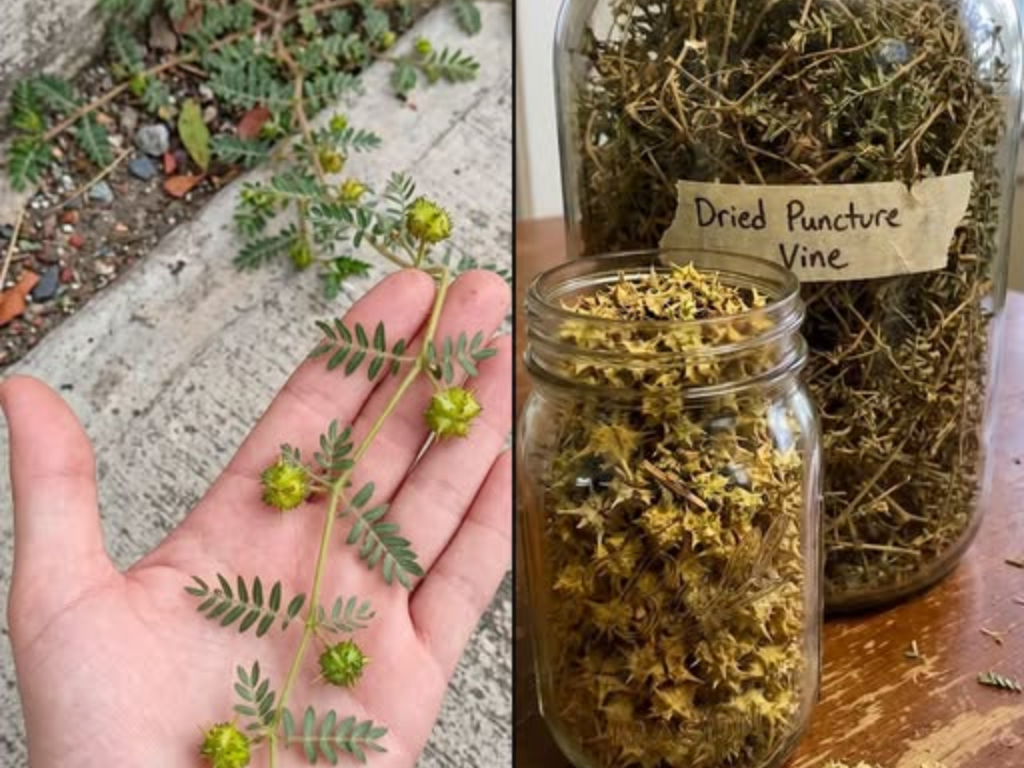
For many gardeners, Tribulus terrestris, better known as “Puncture Vine,” is that stubborn and annoying weed. This plant grows sprawling along the ground, favoring dry, sunny terrain, and produces woody, spiky fruits capable of puncturing bike tires or piercing shoe soles. Due to these formidable spines, it is sometimes called “Goat’s Head” or “Devil’s Thorn.”
Despite this unflattering reputation in the garden, Puncture Vine commands great respect in herbal traditions worldwide. For centuries, across Europe, Asia, and Africa, this hardy plant has been harvested for its natural medicinal properties. Rather than viewing it as a mere weed, traditional herbalists dry its leaves, stems, and spiny fruits to create simple remedies that promote energy, endurance, and overall vitality.
How to Identify Puncture Vine
Before harvesting any wild plant, it is crucial to be certain of its identification. Puncture Vine has distinctive characteristics that make it easier to recognize in late summer and early fall:
Growth habit: The plant forms a sprawling, flattened mat on the ground, with stems radiating outward from a central root. These stems can reach up to one meter in length.
Leaves: The leaves are opposite and composed of 4 to 8 pairs of small, oval leaflets. Both the leaves and stems are covered with fine, silky hairs.
Flowers: Small, bright yellow flowers with five petals open in the morning upon contact with sunlight and close in the afternoon.
Fruit and pods: After flowering, the plant produces a hard, woody fruit. Upon maturity, this fruit splits into five segments (thorns), each equipped with two to four rigid spikes resembling a small goat’s head.
The Traditional Virtues and Benefits of Puncture Vine
Puncture Vine thrives in dry, challenging soils thanks to the production of powerful natural compounds found in its stems, leaves, and seeds. The main active ingredients are steroidal saponins (notably protodioscin) and flavonoids. These components explain several recognized uses:
Physical endurance and energy: Historically used as a general tonic, Puncture Vine combats fatigue and weakness. Today, many athletes use it to support endurance and facilitate recovery after exertion.
Vitality and libido: In traditional Chinese and Ayurvedic medicines, it is valued for stimulating reproductive vitality and sexual desire in both men and women.
Urinary tract and water balance: This plant acts as a gentle natural diuretic, promoting the elimination of excess water through urine and thus supporting kidney and bladder health.
Heart support and circulation: Traditional preparations help promote good blood circulation and assist in maintaining normal blood pressure when it is already within the normal range.
Skin soothing: In some folk cultures, a cooled lotion made from boiled plant material is applied as compresses to calm minor redness and skin irritations.
How to Harvest and Dry Puncture Vine at Home
Proper harvesting and drying are essential for preparing homemade remedies from Puncture Vine.

Choose a clean location: Only pick plants from areas free of pesticides, herbicides, or chemical fertilizers. Avoid roadside edges, industrial zones, and dog parks.
Wear thick gloves: The fruit’s spines are sharp enough to pierce skin and cause painful splinters. Use thick leather gardening gloves when harvesting.
Harvest at the right time: The best time is late summer when leaves are still green and the fruits begin to ripen. Pull up the entire plant from the central root and remove soil.
Clean and dry: Rinse the stems thoroughly in clean cold water to remove dust and insects. Hang the plants in small bunches, upside down, or spread them out in a thin layer on a screen in a dry, well-ventilated room away from sunlight to preserve their color and active compounds.
Store properly: After 1 to 2 weeks, the stems become brittle and the fruits hard as wood. Cut into small pieces (always with gloves) and store in an airtight glass jar away from light. The dried plant can be kept for up to one year.
Three Ways to Use Puncture Vine at Home
Because the active compounds of Puncture Vine are trapped in tough stems and woody fruits, a simple hot water infusion for a few minutes is insufficient. To effectively extract the beneficial principles, heat and time or alcohol must be employed.
1. Traditional Decoction
The simplest and most ancient method is to boil the dried plant. Cooking releases the saponins into the water.
Dosage: Place one level teaspoon of dried, chopped Puncture Vine (leaves, stems, and crushed fruits) into a stainless steel or glass saucepan.
Add water: Pour in 350 ml of cold water.
Gentle simmer: Bring to a boil, then reduce heat, cover and simmer gently for 15 to 20 minutes. The volume will reduce to about one cup.
Strain: Pour the decoction into a cup through a very fine sieve or coffee filter to avoid any small, sharp fragments that might cause injury.
Usage advice: Drink one cup daily after a meal. To lessen the earthy bitterness, add a spoonful of honey or a dash of lemon juice.
2. Homemade Mother Tincture (Alcohol Extract)
The tincture method uses alcohol to extract and preserve active ingredients, offering a practical, long-lasting solution easier to consume regularly than decoction.
Crush the plant: Using a pestle or powerful blender, crush the dried plant parts into coarse pieces.
Fill a jar: Fill a clean glass jar halfway with the crushed plant material.
Add alcohol: Pour vodka or a 40–50% alcohol spirit until about one centimeter above the plant to fully immerse it.
Seal and shake: Seal tightly, shake well, then store in a dark, cool cupboard for 4 to 6 weeks. Shake the jar every two days to mix thoroughly.
Filter and bottle: After maceration, filter the tincture through an unbleached coffee filter into dark glass dropper bottles. Press the plant material well to extract the maximum liquid. Dispose of the waste (not in compost due to persistent spines).
Dosage: Take 20 to 30 drops diluted in a glass of water once or twice daily after meals.
3. Homemade Powder
Some prefer grinding the dried plant into a fine powder to incorporate into smoothies or juices.
Ensure dryness: Make sure the leaves, stems, and fruits are completely dry.
Grind finely: Use a spice grinder or powerful coffee grinder in multiple short sessions until obtaining a homogeneous powder.
Rigorous sifting: Pass the powder through a fine sieve to remove any hard or fibrous pieces that could irritate the throat and stomach.
Usage: Mix between 1/4 and 1/2 teaspoon in a glass of water, juice, or yogurt once daily during a meal.
Essential Safety Rules and Side Effects
Although natural, this potent plant should be used cautiously and respectfully. Here are some crucial guidelines:
Always take with food: The saponins can irritate an empty stomach lining, causing cramps, nausea, or diarrhea if consumed on an empty stomach.
Use in short cycles: Herbalists recommend 3 to 4-week courses followed by a 1 to 2-week break rather than continuous consumption.
Never eat the raw plant: Chewing leaves or fruits raw is prohibited, and infusions or powders must always be well filtered to avoid ingesting spines.
Pregnancy and breastfeeding: Avoid during pregnancy, pregnancy testing phases, or breastfeeding due to risks to hormonal balance and fetal development, as indicated by studies and traditions.
Hormone-sensitive conditions: Those with hormone-related disorders (prostate issues, breast or uterine cancers) should avoid this plant.
Drug interactions: Puncture Vine may lower blood sugar, blood pressure, and acts as a diuretic. If on treatment for diabetes, hypertension, heart conditions, diuretics, anticoagulants, or lithium, extreme caution is necessary.
Keep away from animals: Although safe in moderate, properly prepared human use, intensive grazing on fresh plants can cause liver damage, photosensitivity, and neurological disorders in animals (sheep, goats). Keep dried herbs out of reach of pets.

When "Need" Takes on a Whole New Meaning For a long time, having a woman in a man’s life was Read more

The Power of Hawthorn (Genus Crataegus): A Natural Ally for Heart and Cholesterol Health Hawthorn, belonging to the genus Crataegus, Read more

Sweet Violet (Viola odorata): 25 Incredible Benefits & How to Use It Sweet violet (Viola odorata), also known as wood Read more

Cultivating veggies and herbs indoors is more than just a productive task; it's a delightful and aesthetic journey. The magic Read more
Bull Thistle (Cirsium vulgare): A Wild Plant with Surprising Benefits The bull thistle (Cirsium vulgare) is often dismissed as a Read more

The ingenuity of Swedish furniture design, particularly evident in the flat-pack phenomenon, has transformed how we furnish our homes with Read more

Perfumed Tissues: An Easy DIY Technique The Joy of Scented Tissues: Paper tissues are handy in daily life. While some Read more

Tackling Dog Urine Odor: A Comprehensive Guide The joy of having a canine companion is undeniable, but alongside it come Read more
Discover the Untapped Potential of Chili Pepper Leaves: Nutritional Powerhouse for Your Health and Kitchen When you think of chili Read more
For centuries, Chelidonium majus, commonly known as Greater Celandine, has held a special place in traditional herbal medicine. Recognized by Read more

Eager to master the art of nurturing a Peace Lily? Known scientifically as Spathiphyllum Wallisii, this enchanting plant is often Read more

Euphorbia hirta, commonly known as the “Asthma-plant,” is a medicinal herb renowned in traditional medicine for its diverse health benefits, Read more
An Invention Born from a Passion for Cooking At the end of the 19th century, the importance placed on healthy Read more

Kyllinga brevifolia: A Natural Remedy for Health and Wellness Kyllinga brevifolia, commonly known as green kyllinga or shortleaf spikesedge, is Read more

8 Surprising Benefits of Water Cloves You Probably Didn’t Know About Cloves are widely recognized for their warm, spicy aroma Read more

Transforming Garlic Peels into Gold for Gardeners: In the rhythm of kitchen prep, garlic peels are often discarded without a Read more
The Hidden Power of Bottlebrush: 15 Benefits and Easy Homemade Uses Nature often hides extraordinary healing power in plain sight—and Read more

Creating a fresh and inviting atmosphere in your kitchen doesn't require expensive air fresheners or synthetic scents. With just a Read more

How to Reuse Soap Scraps: Ingenious Ideas Soap bars, after several uses, become tiny and almost unusable. Many of us Read more

Restore the Shine to Your Dull Leather Whether it’s worn-out shoes, tired leather bags, or a sofa that has lost Read more
Garlic: An Ancient Remedy for Better Sleep Since ancient times, garlic has been recognized not only as an essential culinary Read more

The Dog's Nose: A True Superpower It is well known that dogs possess an extraordinary sense of smell. Yet the Read more
Cassava: An Essential Plant at the Heart of a Deadly Paradox Whether in the form of flour, tapioca pearls, or Read more

A Heartbreaking Message Lilo, a gentle and affectionate dog, was found wandering with a leash around her neck and a Read more
Garlic Mustard (Alliaria petiolata): 20 Surprising Benefits and Homemade Uses Garlic mustard (Alliaria petiolata) is often dismissed as a stubborn Read more

The Amazing Benefits of Sumac and How to Use It Sumac is more than just a flavorful spice—it’s a powerful Read more
When a Simple Pistachio Shell Takes on the Appearance of a Monster It all begins with the desire to clean Read more

Why It's Crucial to Clean Your Oven and How to Do It Naturally The Importance of Cleaning Your Oven The Read more

Lina’s room remains untouched by time, as if she had just left yesterday: colored pencils scattered across the desk, an Read more
The Secret of Seasoning: An Essential Traditional Method What if the key to reviving a frying pan lay in an Read more

Why Do Some People Wash Their Ground Beef? The practice of washing ground beef often comes from a good intention: Read more

Horseweed (Erigeron canadensis): 20 Amazing Benefits and How to Use It Horseweed, also known as Erigeron canadensis or Canadian fleabane, Read more

Sida acuta, also known as “common wireweed,” is a hardy plant often found in fields and roadsides. While it may Read more

When Affection Triumphs Over Blood Ties Sharaine and Wilson Caraballo, warm-hearted parents of a large family with five children, opened Read more

Ever wish your home could keep that fresh, clean scent for more than a few hours? There’s a simple, natural Read more

Datura stramonium, commonly known as Jimson weed, thorn apple, or devil's trumpet, is a plant native to North America but Read more

Pigweed, also known as amaranth, is a leafy green plant that has been cherished in various cultures for its nutrient-rich Read more
Basil seeds, often referred to as sabja or tukmaria, come from sweet basil. Though tiny, they hold an exceptional nutritional Read more

Understanding, anticipating, and supporting your dog through every stage of their life is essential to providing them with the best Read more

The Secret Language of Burglars: A Discreet Warning Signal Burglars use an actual coding system to identify their targets. They Read more
