
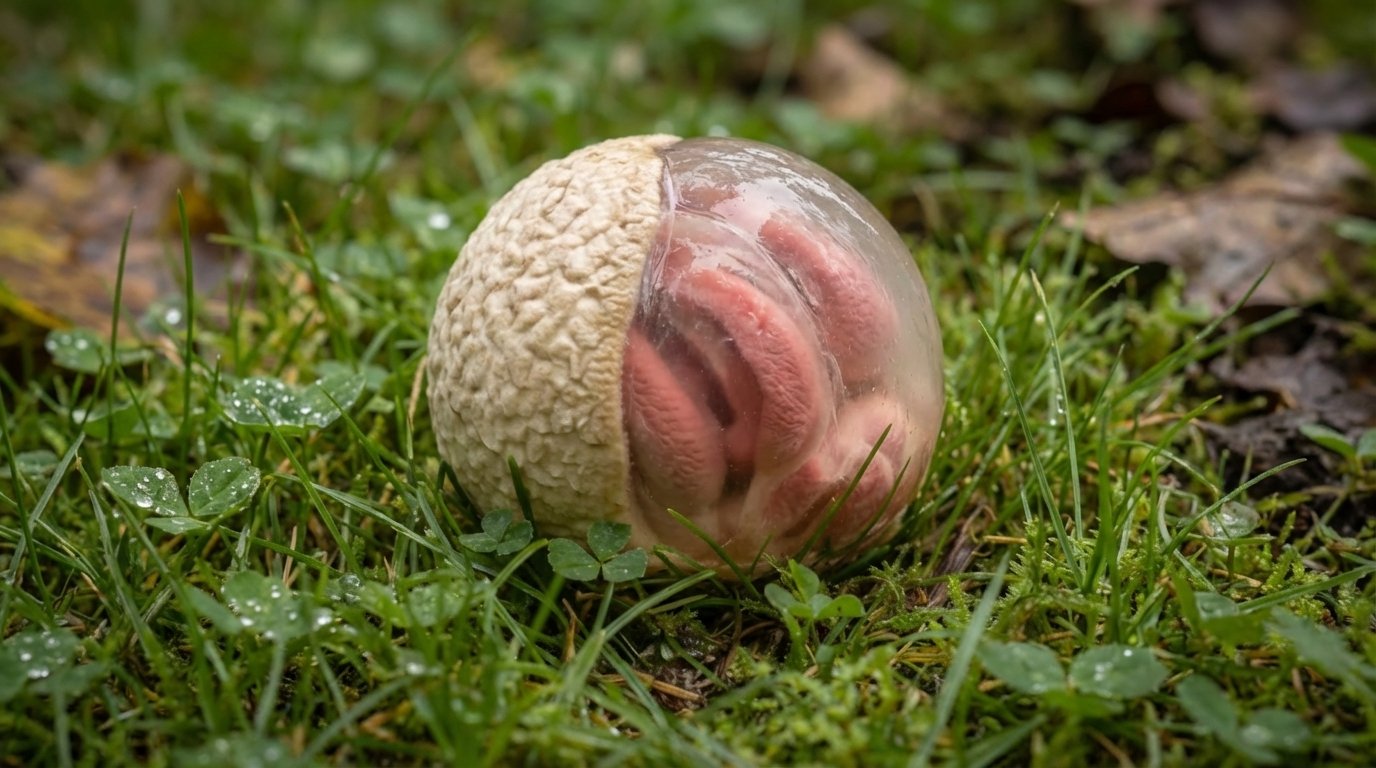
When I first spotted a peculiar red, slimy form in my garden, my initial thought was that I had stumbled upon a bizarre and unsettling creature. Its strange look, sticky texture, and unpleasant odor gave the impression that something unnatural had suddenly emerged from beneath the soil. However, the reality was far more astonishing, entirely natural, and in its own way, truly captivating.
On an otherwise ordinary morning, I stepped outside to water my flowers, expecting nothing more than the usual peaceful start to the day. To my surprise, there it was—an unusual red mass pushing up through the flower bed. It appeared moist, fleshy, and almost pulsating with life. My first impulse was to recoil. For a fleeting moment, I wondered if it was some bizarre creature, a giant larva, or perhaps something dangerous. Despite my unease, curiosity quickly overcame caution, prompting me to investigate exactly what this strange entity might be.
An Alarming Discovery in the Garden
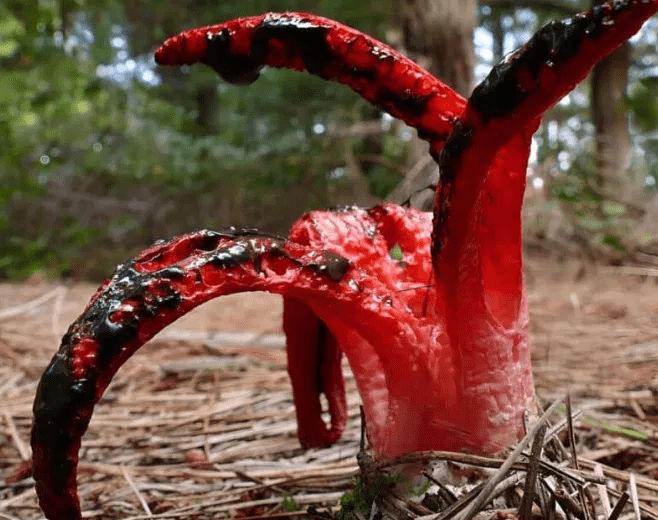
Imagine the scene: I was casually strolling through the garden with a cup of coffee in my hand when my eyes suddenly caught a shiny, reddish form that resembled tentacles or elongated fingers stretching outward. What startled me was how abruptly it seemed to have arrived, as if it had appeared overnight. Adding to the unease was a strong, unpleasant smell hanging heavily in the surrounding air, making the whole experience all the more disconcerting.
This was exactly my experience. My immediate feelings were a turbulent mixture of fear, confusion, and disbelief. Nothing like this had ever crossed my path before. The odd shape combined with the pungent odor convinced me that this had to be some sort of animal or pest. Both intrigued and concerned, I started researching, aiming to identify the mysterious organism before it could spread or cause harm in the garden.
What I uncovered was simultaneously comforting and extraordinary.
Not an Animal, but an Extraordinary Fungus

The strange “creature” was actually not an animal at all, but a fungus named Anthurus archeri, commonly referred to as devil’s fingers. The name makes perfect sense as soon as you see it. Its vivid red arms spread outwards like claws or tentacles, giving it one of the most dramatic and striking appearances of any fungus found in nature.
This remarkable species originally hails from Australia and Tasmania, but over time it has expanded to various other parts of the globe. Presently, it can also be spotted throughout Europe, particularly in moist, forested areas and other humid environments rich in organic matter. Though it may appear exotic or out of place, it has now become part of the natural fungal diversity in many regions.
The most arresting feature of this fungus is its unconventional shape. Instead of growing like typical mushrooms with familiar stems and caps, this fungus extends into several elongated red arms that rise from the soil and fan outward. These arms are often coated with a sticky, dark slime full of spores, which adds to its eerie look and makes it appear almost animate.
Why Does It Smell So Bad?
A particularly surprising aspect of this fungus is the strong odor it emits. The smell is often compared to that of rotting flesh or decomposing organic material. While this scent is deeply unpleasant to humans, in the natural world it serves a very clever and purposeful function.
The foul odor is specifically designed to attract flies and other insects. These insects are drawn in, mistaking the smell for a food source or a suitable place to lay their eggs. When they land and crawl across the sticky surface, spores adhere to their bodies. The insects then fly off to different locations, helping the fungus disperse its spores and reproduce naturally.
So, although the smell is disgusting to us, it is actually a highly effective survival strategy. Rather than relying solely on the wind for spore dispersal, this fungus utilizes insects as carriers. This adaptation is a striking example of nature’s ingenuity in evolving unusual yet brilliant methods to ensure the continuation of a species.
A Fungus That Begins Life as an Egg
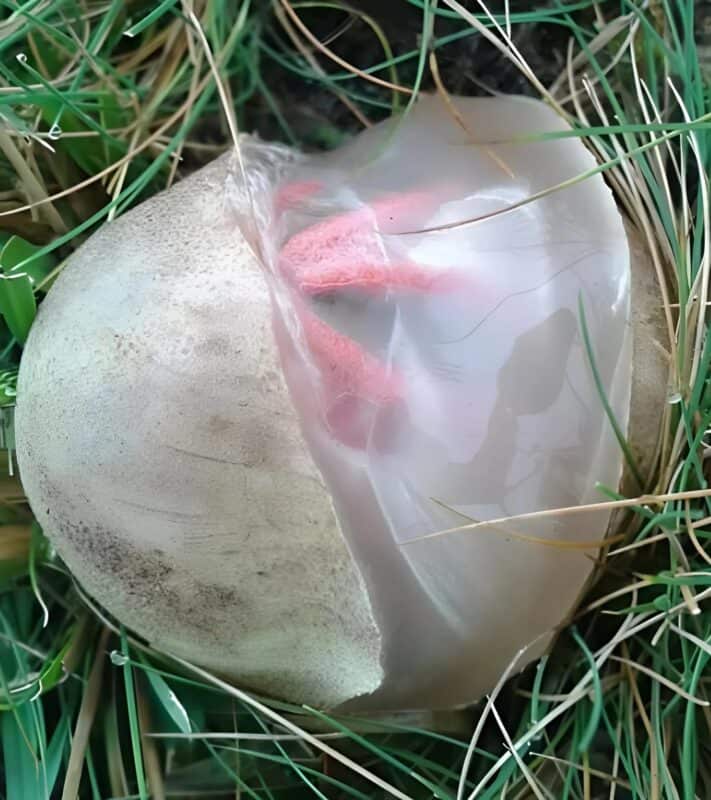
Another intriguing fact is that this fungus does not initially have a frightening appearance. In its early stage, it resembles a small, whitish “egg” resting either on the surface or just beneath the soil. At this point, there is no hint of the bizarre shape it will soon develop.
As it matures, the outer casing splits open and the vivid red arms begin to emerge. These arms unfold quickly, transforming the fungus from a small, innocuous bulb into a dramatic, star-shaped organism that appears to have suddenly burst from the earth. This abrupt transformation explains why coming across it unexpectedly in a garden can be such a startling experience. One day, the soil looks completely normal, and then the next, this strange crimson form has seemingly appeared overnight.
This lifecycle is part of what makes the fungus so captivating. Its transformation is almost theatrical, shifting from a plain, egg-like stage to something resembling a creature seemingly from another world.
Is It Dangerous?
The reassuring news is that this fungus is generally not harmful. Despite its alarming appearance and strong odor, it typically poses no danger to humans or pets in a normal garden setting. However, like many wild fungi, it’s best to avoid touching it directly with bare hands. Some individuals may experience mild skin irritation, so it’s always prudent to refrain from unnecessary contact.
If handling becomes necessary for any reason, wearing gloves is the safest precaution. In most cases, though, intervention isn’t needed. The fungus usually fades away on its own after some time, especially once it has completed its reproductive cycle.
Far from being a threat, it is an integral part of the natural process of decomposition. Like many fungi, it plays a crucial role breaking down organic material, contributing to the overall biodiversity and health of its environment. Even if it initially seems frightening, it is simply another example of the strange, essential life forms that surround us.
Nature Is Full of Unexpected Surprises
This encounter reminded me of an important lesson: nature is full of surprises. What initially seems frightening, unnatural, or monstrous often turns out to be a perfectly ordinary element of the ecosystem. Unfamiliar sights can trigger fear, especially when they emerge suddenly and look nothing like the familiar plants and animals we expect to encounter in our own backyard.
In reality, we understand only a small fraction of the plants, fungi, and animals that share our world. Sometimes, all it takes is a closer examination of a garden, a forest trail, or a patch of moist soil to uncover something truly extraordinary. Not every strange discovery is dangerous — sometimes it is simply a rare chance to witness one of nature’s most unusual and fascinating creations.
Next time I come across something odd in the natural world, I will try to resist panicking immediately. Instead, I will pause, observe carefully, and seek to learn more. After all, what initially appears mysterious or alarming may actually be one of nature’s most intriguing wonders hidden in plain sight.

Sweet Violet (Viola odorata): 25 Incredible Benefits & How to Use It Sweet violet (Viola odorata), also known as wood Read more

8 Surprising Benefits of Water Cloves You Probably Didn’t Know About Cloves are widely recognized for their warm, spicy aroma Read more

Purple Deadnettle (Lamium purpureum): Benefits, Uses & How to Make Tea Often overlooked or mistaken for an ordinary weed, Purple Read more
The Symbolic Significance of Slugs Inside the Home Since ancient times, various cultures have assigned deep symbolic meanings to slugs. Read more

The Art of Container Flower Combinations Designing with flowers in pots is a delightful blend of horticulture and floral design. Read more

Mullein (Verbascum thapsus), a tall, woolly plant often seen growing along roadsides and in open fields, has been treasured for Read more
Diseases Transmitted by Ticks When we talk about ticks, Lyme disease immediately comes to mind, and for good reason. However, Read more
This content is provided for informational purposes only. For medical advice or diagnosis, please consult a healthcare professional. The common Read more

Mimosa Pudica, commonly known as the “Sensitive Plant” or “Touch-Me-Not,” is famous for its unique reaction to touch—its leaves fold Read more

Why Is It Essential to Regularly Defrost Your Freezer? The gradual buildup of frost inside your freezer goes beyond just Read more
These tiny parasites can send shivers down your spine just by mentioning them. Whether on your skin or that of Read more
Silica gel packets are frequently included in the packaging of electronics, clothing, and many other products. These small sachets contain Read more

You have probably come across an intriguing object whose purpose completely eluded you. Whether it was a discovery in a Read more

Metal Plates: An Ingenious Solution to Daily Wear and Tear At the beginning of the 20th century, shoes were not Read more

Clogged Shower Drain? Try Baking Soda! Experiencing a stagnant pool of water after a refreshing shower can be a mood Read more
When you sink your teeth into a soft, caramel-sweet date, the last thing on your mind is usually the tough Read more

When you enter a hotel room, have you ever noticed that long piece of fabric laid across the foot of Read more

Inheritance in France: A Protected Share, Untouchable Even in Cases of Conflict In France, there is a fundamental legal principle Read more
A Natural Ally for a Healthier and More Pleasant Home We admire the spider plant for its delicate and soothing Read more
Rosemary, scientifically identified as Rosmarinus officinalis, is widely recognized not only for its role in cooking but also for its Read more

Have you ever encountered this unusual practice of sprinkling cinnamon powder in front of your front door? At first glance, Read more

How to Maintain a Stainless Steel Iron Although sturdy and durable, the stainless steel soleplate of an iron can blacken Read more

Datura stramonium, commonly known as Jimson weed, thorn apple, or devil's trumpet, is a plant native to North America but Read more

Why Is a Temperature of 40°C Not Enough to Effectively Eliminate Bacteria? Many people consider 40°C to be a balanced Read more

Skin Changes After Age 65 As we age, our skin undergoes natural changes. The epidermis thins and becomes more fragile. Read more
The Hidden Power of Pomegranate Peel: 10 Health Benefits and How to Use It Pomegranate is often celebrated for its Read more

The Importance of Curtain Cleaning in Your Home Generally, when cleaning the house, after dusting the furniture, one often overlooks Read more
The Silent Enemy: Tartar and Bacteria Tartar is a common affliction affecting our teeth. It forms from the gradual hardening Read more

Why Do Mobile Phone Cables Wear Out So Quickly? Modern charging cables are often designed with delicate materials, especially around Read more

In the realm of gardening, we often stick to traditional methods like basking in sunlight, diligent watering, and soil enriched Read more

Unwanted Houseguest: The Fly The fly is arguably the most disliked insect on Earth, primarily due to its bothersome traits. Read more

Guava is often hailed as a superfruit, but did you know that its leaves also pack an extraordinary punch in Read more

Urinating While Standing, Tail Wagging: A Deliberate Behavior When you discover a small puddle of urine on a wall or Read more
Often, due to poor ventilation or certain climatic conditions, dreaded mold can develop on the walls of our homes. In Read more

Timeless Elegance That Transcends Generations Choosing black often reflects a profound pursuit of refinement and sophistication. This color goes beyond Read more
Every winter, countless orange peels end up in the trash. But what if you could transform these fragrant scraps into Read more

Understanding, anticipating, and supporting your dog through every stage of their life is essential to providing them with the best Read more

We spend countless hours behind the wheel, knowing every street by heart, yet still... sometimes important driving habits escape our Read more
Are Lilacs Edible? Health Benefits of the Beautiful Syringa Blossoms With their sweet fragrance and delicate clusters of flowers, lilacs Read more
Rosemary is a herb renowned not only for its fragrant aroma in cooking but also for its extensive health advantages, Read more
