
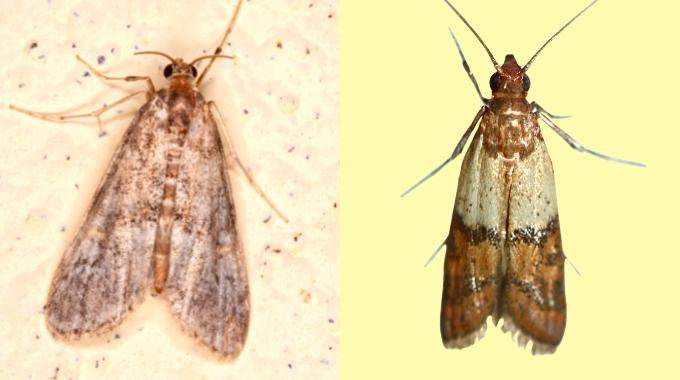
What differences exist between textile moths and pantry moths? One infiltrates our food supplies, while the other attacks our clothing. Despite this contrast, they share a common trait: both are a genuine nuisance in our daily lives.
Although these harmful moths may look similar, they belong to distinct families. So, how can you distinguish them clearly? Discover the essential differences to correctly identify these two unwanted species without error.
1. Pantry Moths

Here is some good news: pantry moths do not attack your clothes. However, they have the ability to invade packages or jars containing food, even those that appear perfectly sealed. Once established, they lay their eggs inside, making it necessary to completely discard the contaminated food.
How to recognize a pantry moth?

Its scientific name is Ephestia kuehniella.
It displays a coloration of white mixed with gray.
It particularly favors warm environments.
As an adult, it can reach up to 25 mm in length.
While it poses no direct danger to human health, it is still advised to eliminate any food it infests.
You will mainly find it in cereals, rice, flour, biscuits, dried fruits, or seeds — all highly attractive items as they serve as sites for laying eggs. The larvae feed on these provisions.
Its reproduction is rapid: a female can lay up to 200 eggs, which hatch into larvae within 3 to 4 days before developing into moths in about a month.
The larvae are easy to identify: they are small white worms with black heads.
2. Textile Moths

Conversely, textile moths spare your food. Their main target is your wardrobe, where they hide to lay their eggs. When these hatch, the larvae attack the fibers of fabrics. The damage can be considerable, especially on valuable items like wedding dresses, fur, or wool sweaters, which are often distorted by these small creatures.
These little pests are responsible for the visible holes in your clothing, causing real havoc in your closet.
How to identify a clothes moth?

Its scientific name is Tineola bisselliella.
It has a beige to brown color, sometimes slightly golden.
It prefers humid environments.
In sensitive individuals, it can trigger allergies and asthma attacks.
The adult measures between 7 and 10 mm.
This moth particularly favors keratin, found in animal hair, as well as wool, silk, feathers, and even wigs.
The larvae, cream white with brown heads, are responsible for the visible holes in clothing as they feed on keratin-rich fibers.
Their transformation cycle into moths lasts about six weeks.
Now that you know how to distinguish pantry moths from textile moths, you can better combat them.
How to effectively fight against moths?
If you have detected their presence in your home, it is natural to want to eliminate them quickly. For that, I recommend a radical, 100% natural treatment against pantry moths that is effective and safe.
For textile moths, several traditional remedies prove highly effective in limiting their spread and protecting your delicate clothing. You can also store your clothes in special protective covers to safeguard them from these pests’ attacks.
And you?
Do you know other differences between pantry moths and textile moths? If certain methods have worked for you, please share them in the comments. We look forward to your feedback with great interest!

A Simple Meow Reveals a Heartbreaking Truth That morning, Brigadier Johnson was not expecting anything extraordinary from his day. Yet, Read more

An Ordinary Object Turned Viral Mystery What sparked the excitement? A photo showing a long, curved object made of metal Read more

How can a simple homemade mixture really help make your teeth whiter? Here is the secret that has already captivated Read more

10 Secrets You Need to Know Before Eating Okra Okra, also known as “lady’s finger,” is a green, pod-shaped vegetable Read more
For centuries, the bay leaf has stood as a symbol of protection, wisdom, and soothing comfort. Salt, by contrast, represents Read more

The Importance of Ventilating Your Home in Winter Indoor air that is overly saturated with humidity is not only uncomfortable Read more

The Fork Trick: An Ideal Solution for Long Zippers Long zippers, such as those found on jackets or coats, can Read more

Grease buildup on kitchen cabinets is a widespread issue that many homeowners encounter. Frequent cooking results in grease splatters that Read more

The Loyal Friend: The Comfort of the First Choice We all have that steady and comforting person in our lives, Read more
A Cry in the Face of an Unexpected Mystery Startled, the man let out an involuntary cry upon discovering what Read more

Juniper, a versatile and aromatic plant, has been valued for centuries for its culinary, medicinal, and therapeutic uses. Known for Read more
Uncovering the Hidden Mysteries in Everyday Objects Why do certain objects evoke such surprise and curiosity? Whether it’s opening an Read more
Two Years in the Freezer: Is It Really Too Late? It is common to assume that a long storage date Read more
Embroideries and Refined Details: Don't Throw Away Your Textile Treasures Some old towels hold true treasures: hand-embroidered initials, delicate lace, Read more

Why Should You Avoid Leaving the Key in the Lock? Leaving the key in the lock might initially seem like Read more

Timeless Elegance That Transcends Generations Choosing black often reflects a profound pursuit of refinement and sophistication. This color goes beyond Read more

Purslane (Verdolaga) is no longer a garden menace but a valuable gem! This remarkable plant is reclaiming its place in Read more

Most of us believe we understand baking soda well. It rests quietly in a kitchen cupboard, freshens the refrigerator, rescues Read more

Why Do Mobile Phone Cables Wear Out So Quickly? Modern charging cables are often designed with delicate materials, especially around Read more

Castor Oil: A Natural Treasure to Rediscover Derived from the seeds of Ricinus communis, this thick, golden plant oil contains Read more
A Natural Remedy for Your Well-being For centuries, activated charcoal has been renowned for its exceptional absorption capabilities. Acting like Read more

Why Does Mold Appear in the Drawer of Your Washing Machine? Mold develops in environments where moisture, heat, and organic Read more

Before your next journey, it might be worth reexamining some of your packing habits. What a luggage professional has revealed Read more

Unwanted Houseguest: The Fly The fly is arguably the most disliked insect on Earth, primarily due to its bothersome traits. Read more
Combining lemon with charcoal may initially seem unusual, yet this potent duo unites the cleansing qualities of activated charcoal with Read more
Imagine a remedy so simple that you likely already have it in your home. A homemade mixture capable of enhancing Read more

The Risks Associated with Excessive Screen Exposure Prolonged exposure to screens can have serious consequences on the overall development of Read more

Skin Changes After Age 65 As we age, our skin undergoes natural changes. The epidermis thins and becomes more fragile. Read more

How to Reuse Soap Scraps: Ingenious Ideas Soap bars, after several uses, become tiny and almost unusable. Many of us Read more

The Symbolic Significance of Slugs Inside the Home Since ancient times, various cultures have assigned deep symbolic meanings to slugs. Read more
We thought they had been eradicated, yet bed bugs are making a strong comeback. These tiny, nearly invisible creatures have Read more

Rice Water and Baking Soda: A Surprising Duo to Unclog Your Drains Few people realize that the water used to Read more
Ingenious Uses for Expired Cornstarch A Natural Cleaner for Windows and Surfaces Did you know that cornstarch can easily substitute Read more

Unveiling the Secrets of Burning Bay Leaves in Your Home The age-old tradition of burning bay leaves, once prevalent in Read more

A Wooden Box with Colorful Slats A user was intrigued by a simple wooden box containing slats of various colors. Read more

The Illusion That Changed Everything On that day, Thunder, a majestic black horse, stood calmly beside her. Yet in the Read more

Mimosa Pudica, commonly known as the “Sensitive Plant” or “Touch-Me-Not,” is famous for its unique reaction to touch—its leaves fold Read more
The Ultimate Healing Tonic: A Powerful Natural Drink for Swollen Feet, Diabetes & Poor Circulation Chronic swelling in the feet, Read more
For centuries, Chelidonium majus, commonly known as Greater Celandine, has held a special place in traditional herbal medicine. Recognized by Read more
Fig leaves, often overlooked behind the sweet and flavorful fruit they accompany, are an incredible source of numerous health benefits. Read more
